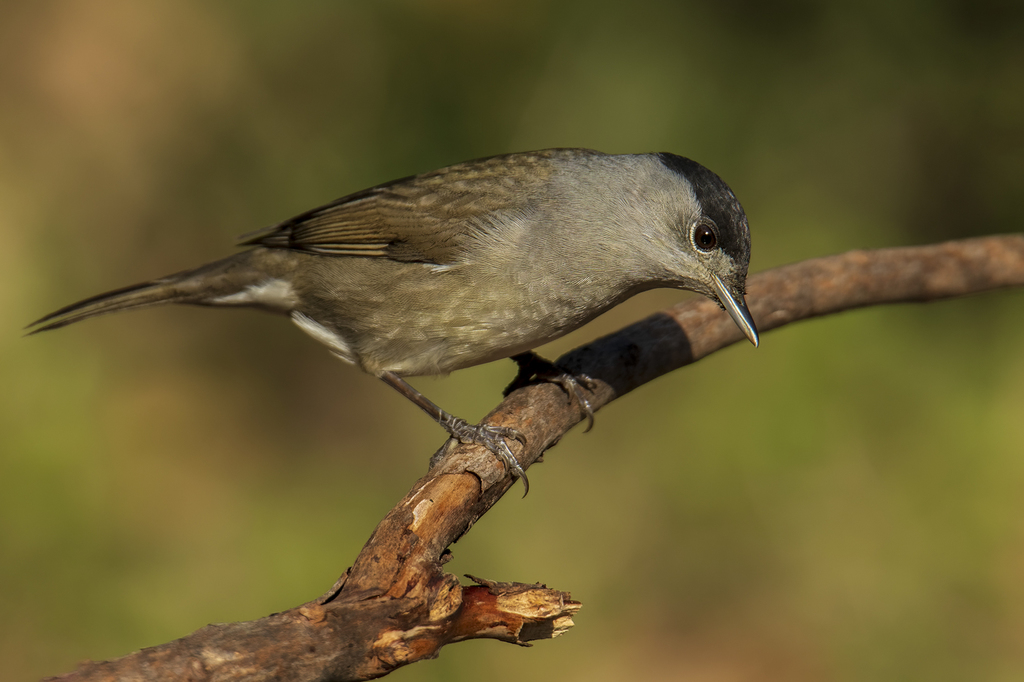
Eurasian Blackcap
Sylvia atricapilla
Also known as: Blackcap, Tallarol de Casquet
Habitat
Mid-canopy
Diet
Omnivore
Active Time
Diurnal
Size
17 g
About This Species
A grey-brown warbler named for the male's neat black cap, best located by its rich, fluting song delivered from dense cover in woodland, scrub and overgrown gardens. It forages in mid-canopy foliage for insects in summer, switching to berries in autumn, which draws it to fruiting shrubs like ivy and elder. Spring through early summer is the best time to hear its song, while some populations linger through winter where berries remain available.
Ethical Viewing Guidelines
- A small, cover-loving warbler is rarely approached closely in any case, and patient, quiet observation near fruiting shrubs works better than trying to get near an active singer.
- Nests hidden in dense vegetation are protected from intentional disturbance under wildlife law in the UK and across the EU, so avoid pushing into thick cover during the breeding season.
- Watching from a short distance with binoculars causes far less disruption than trying to approach on foot.
LCAvesPasseriformesSylviidae
Seasonal Activity
5,663,166 sightings · 2000–2026
Citizen science records via GBIF
All monthsThis month
Classification
- Kingdom
- Animalia
- Phylum
- Chordata
- Class
- Aves
- Order
- Passeriformes
- Family
- Sylviidae
Traits
- Diet
- Omnivore
- Foraging
- Mid-canopy
- Activity
- Diurnal
- Body mass
- 17 g
Photo
(c) Marina Ribeiro, some rights reserved (CC BY-NC), uploaded by Marina Ribeiro
CC-BY-NC-4.0
Occurrence data from GBIF.