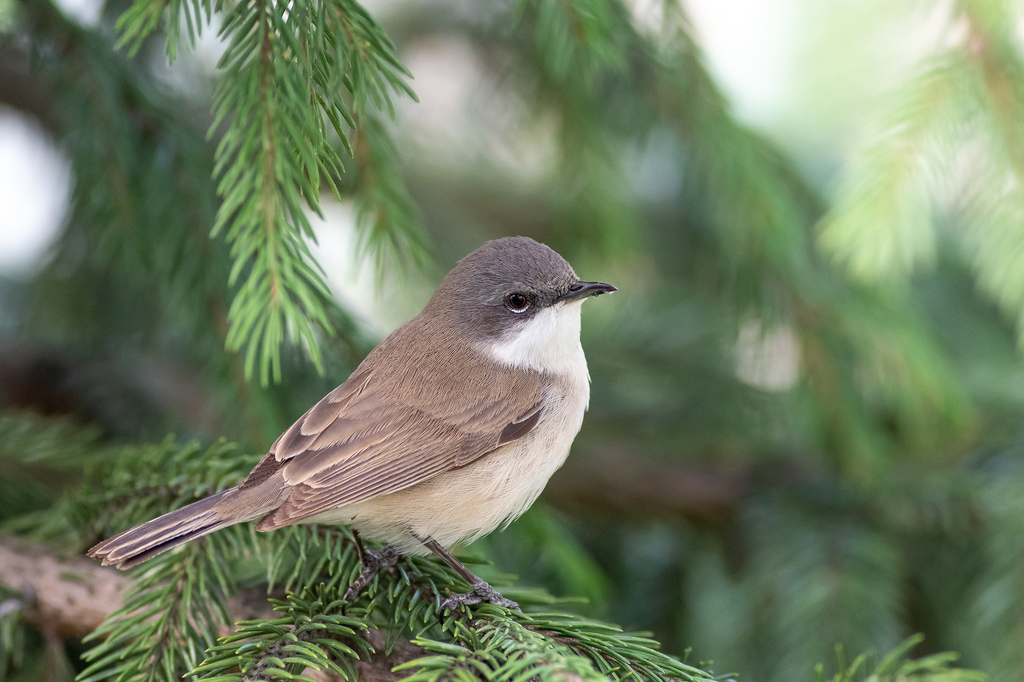
Lesser Whitethroat
Sylvia curruca
Also known as: Grey Whitethroat
Habitat
Understory
Diet
Invertebrate
Active Time
Diurnal
Size
11 g
About This Species
This small warbler favours dense scrub, hedgerows and low understory, staying hidden more often than not, so listen for its distinctive rattling song delivered from cover. It is most detectable at dawn and dusk in spring and early summer when males are singing to hold territory, and patient stillness near thick bushes is more productive than active searching. Passage periods in spring and autumn can also bring birds through more open scrub as they migrate.
Ethical Viewing Guidelines
- Keep well back from dense cover where the bird is likely nesting, and avoid pushing into hedgerows or thickets to get a closer look.
- Wild bird nests, eggs and young are protected by law in much of this species' breeding range, particularly in Europe, so disturbance during the breeding season should be avoided entirely.
- A stationary observer with binoculars at the edge of the scrub will see more than someone moving through it.
Seasonal Activity
1,171,345 sightings · 2000–2026
Citizen science records via GBIF
Classification
- Kingdom
- Animalia
- Phylum
- Chordata
- Class
- Aves
- Order
- Passeriformes
- Family
- Sylviidae
Traits
- Diet
- Invertebrate
- Foraging
- Understory
- Activity
- Diurnal
- Body mass
- 11 g
Photo
(c) Евгений Гурьевских, some rights reserved (CC BY-NC), uploaded by Евгений Гурьевских
CC-BY-NC-4.0
Occurrence data from GBIF.