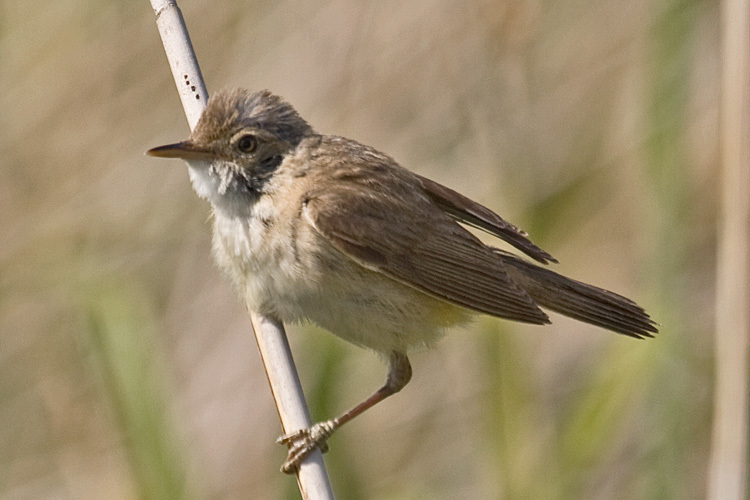
Eurasian Reed Warbler
Acrocephalus scirpaceus
Also known as: Reed Warbler, Common Reed Warbler, European Reed Warbler
Habitat
Understory
Diet
Invertebrate
Active Time
Diurnal
Size
12 g
About This Species
A plain brown warbler that lives almost entirely within dense reedbeds, clambering between vertical stems rather than perching in the open. It is far easier to hear than see, giving a churring, rhythmic song of repeated grating phrases from deep cover through the day and into the night. Late spring through summer, when males are singing to hold territory, is the best time to listen for it along reed-fringed lakes, canals and marshes.
Ethical Viewing Guidelines
- Stick to paths and boardwalks around reedbeds rather than entering the reeds themselves, both to avoid trampling nesting habitat and because the birds will simply stop singing and go quiet if disturbed.
- Reedbed nesting birds are protected under wildlife law in much of their range, and pushing into reeds to see a singing bird risks damaging both the habitat and any nearby nest.
- Listening from the reedbed edge, rather than trying to get a clear view, is both the more reliable and the less disruptive way to enjoy this species.
LCAvesPasseriformesAcrocephalidae
Seasonal Activity
2,422,011 sightings · 2000–2026
Citizen science records via GBIF
All monthsThis month
Classification
- Kingdom
- Animalia
- Phylum
- Chordata
- Class
- Aves
- Order
- Passeriformes
- Family
- Acrocephalidae
Traits
- Diet
- Invertebrate
- Foraging
- Understory
- Activity
- Diurnal
- Body mass
- 12 g
Photo
(c) Tony Morris, some rights reserved (CC BY-NC)
CC-BY-NC-4.0
Occurrence data from GBIF.