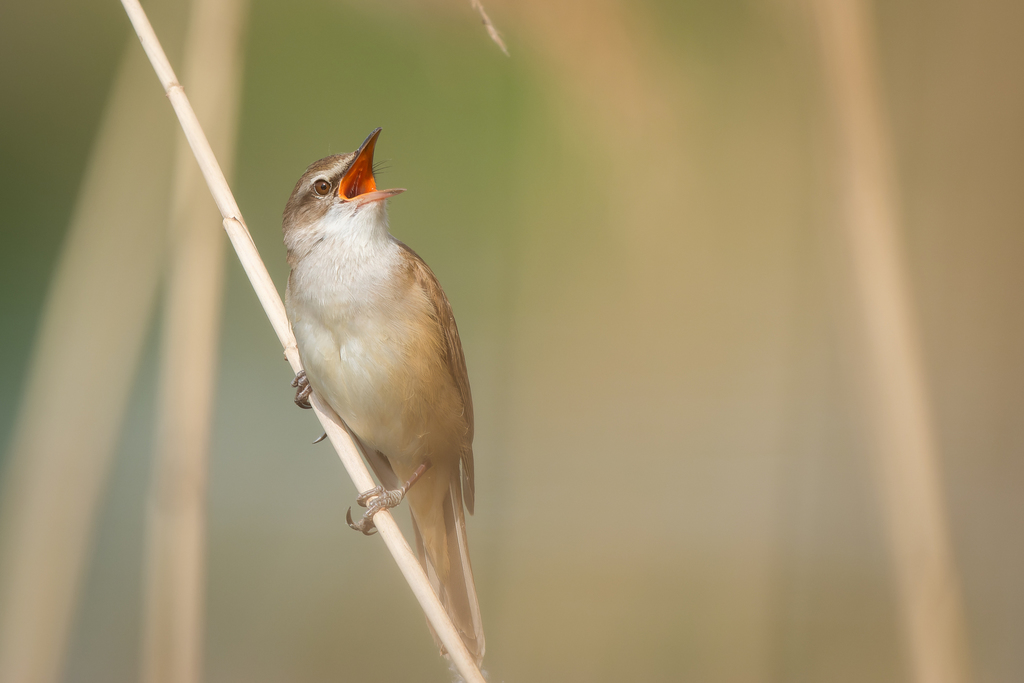
Great Reed Warbler
Acrocephalus arundinaceus
Habitat
Understory
Diet
Invertebrate
Active Time
Diurnal
Size
30 g
About This Species
Breeds in dense reedbeds and waterside vegetation across Europe and western Asia, wintering in sub-Saharan Africa. Its loud, harsh, croaking song, often delivered from an exposed reed stem, is usually how birders find it between May and July. Listening at dawn or dusk near extensive reedbeds during the breeding season is the most reliable approach.
Ethical Viewing Guidelines
- Protected as a wild bird under bird conservation law across its European breeding range.
- Nests are woven low among reed stems and easily damaged, so avoid wading or pushing into reedbeds during the breeding season; view and listen instead from paths, hides or a boat kept at a distance.
LCAvesPasseriformesAcrocephalidae
Seasonal Activity
369,018 sightings · 2000–2026
Citizen science records via GBIF
All monthsThis month
Classification
- Kingdom
- Animalia
- Phylum
- Chordata
- Class
- Aves
- Order
- Passeriformes
- Family
- Acrocephalidae
Traits
- Diet
- Invertebrate
- Foraging
- Understory
- Activity
- Diurnal
- Body mass
- 30 g
Photo
(c) Tomas Broucek, some rights reserved (CC BY), uploaded by Tomas Broucek
CC-BY-4.0
Occurrence data from GBIF.