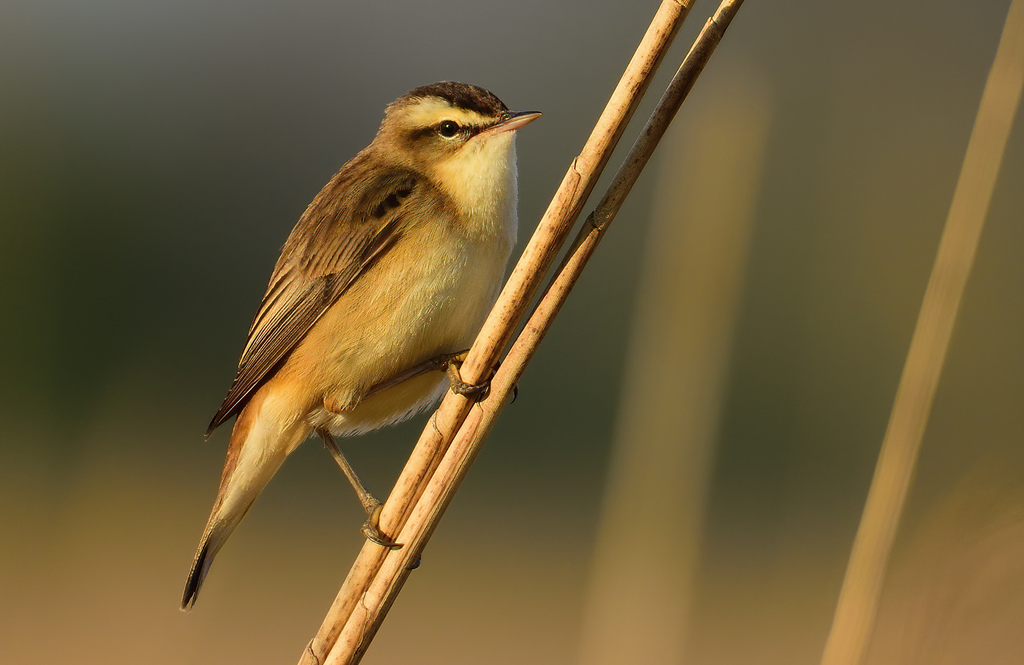
Sedge Warbler
Acrocephalus schoenobaenus
Habitat
Understory
Diet
Invertebrate
Active Time
Diurnal
Size
12 g
About This Species
A small, streaky warbler of reedbeds, wet scrub and waterside vegetation across Europe and western Asia, more often heard than seen as it delivers a scratchy, varied, mimicking song from deep cover. It sometimes performs a brief song flight above the reeds, which is the easiest moment to get a clear view. Late spring, when males are singing to establish territories, is the best time to locate one by ear before scanning likely perches.
Ethical Viewing Guidelines
- Stay on paths and avoid pushing into reedbeds or waterside scrub, since this disturbs both the bird and the wetland habitat it depends on.
- Nesting migratory birds are protected under wildlife law across most of its breeding range, though specific rules vary by country, so avoid searching for or approaching nests.
- Listening and watching from a discreet distance is both more effective and less disruptive than trying to get close.
LCAvesPasseriformesAcrocephalidae
Seasonal Activity
1,388,129 sightings · 2000–2026
Citizen science records via GBIF
All monthsThis month
Classification
- Kingdom
- Animalia
- Phylum
- Chordata
- Class
- Aves
- Order
- Passeriformes
- Family
- Acrocephalidae
Traits
- Diet
- Invertebrate
- Foraging
- Understory
- Activity
- Diurnal
- Body mass
- 12 g
Photo
(c) Ad Konings, some rights reserved (CC BY-NC), uploaded by Ad Konings
CC-BY-NC-4.0
Occurrence data from GBIF.