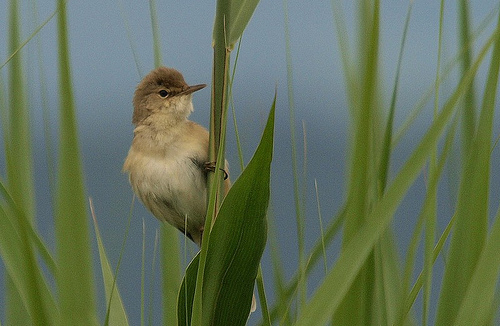
Marsh Warbler
Acrocephalus palustris
Habitat
Understory
Diet
Invertebrate
Active Time
Diurnal
Size
12 g
About This Species
Listen rather than look first: this small, plain warbler skulks low in tall waterside vegetation and scrub across Europe, and is best detected by an extraordinary song that strings together mimicked phrases borrowed from dozens of other species, including many picked up on African wintering grounds. It breeds in tall herbaceous growth near wetlands, ditches and riverbanks, arriving late and singing most persistently at dawn and dusk in early summer. Patience at the edge of likely breeding habitat in June is more productive than trying to track a moving bird through dense cover.
Ethical Viewing Guidelines
- Stay on paths and keep back from dense waterside vegetation during the breeding season rather than pushing in to see a singing bird, since nests sit low and are easily trampled or exposed to predators.
- It is a protected species under wildlife legislation in the European Union and the UK, though specific provisions and enforcement differ between countries.
- Playback of recordings to draw a bird into view should be used sparingly, if at all, since it can pull birds away from territory defence and feeding.
Seasonal Activity
553,980 sightings · 2000–2026
Citizen science records via GBIF
Classification
- Kingdom
- Animalia
- Phylum
- Chordata
- Class
- Aves
- Order
- Passeriformes
- Family
- Acrocephalidae
Traits
- Diet
- Invertebrate
- Foraging
- Understory
- Activity
- Diurnal
- Body mass
- 12 g
Photo
(c) Luciano Giussani, some rights reserved (CC BY-NC-SA)
CC-BY-NC-SA-4.0
Occurrence data from GBIF.