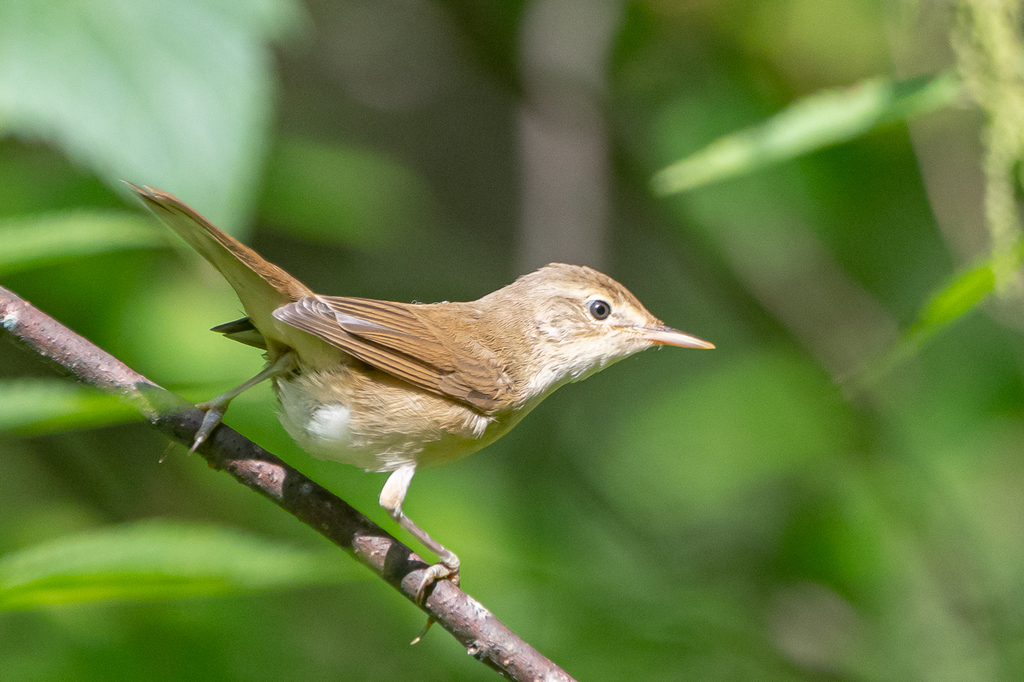
Blyth's Reed Warbler
Acrocephalus dumetorum
Also known as: Red Warbler
Habitat
Mid-canopy
Diet
Invertebrate
Active Time
Diurnal
Size
11 g
About This Species
This unassuming warbler skulks in dense reedbeds, scrub, and tall grass across its Asian breeding and wintering range, making it far easier to hear than see. Listen for its rich, varied, mimicking song, often delivered from low cover at dawn or dusk, and watch for brief movements low in vegetation rather than expecting prolonged views. Spring and early summer, when males sing to establish territory, offer the best chance of a clear encounter.
Ethical Viewing Guidelines
- Keep well back from dense cover where the bird is singing and avoid playback or repeated pishing, which can disturb a territorial male during the breeding season.
- Habitat protection and disturbance rules for songbirds vary considerably across the countries this species passes through on migration, so defer to local guidance rather than a single standard.
- Moving slowly and staying on paths through reed and scrub habitat helps avoid trampling nests that are well hidden low in vegetation.
LCAvesPasseriformesAcrocephalidae
Seasonal Activity
384,560 sightings · 2000–2026
Citizen science records via GBIF
All monthsThis month
Classification
- Kingdom
- Animalia
- Phylum
- Chordata
- Class
- Aves
- Order
- Passeriformes
- Family
- Acrocephalidae
Traits
- Diet
- Invertebrate
- Foraging
- Mid-canopy
- Activity
- Diurnal
- Body mass
- 11 g
Photo
(c) Dmitry Dubikovskiy, some rights reserved (CC BY-NC), uploaded by Dmitry Dubikovskiy
CC-BY-NC-4.0
Occurrence data from GBIF.