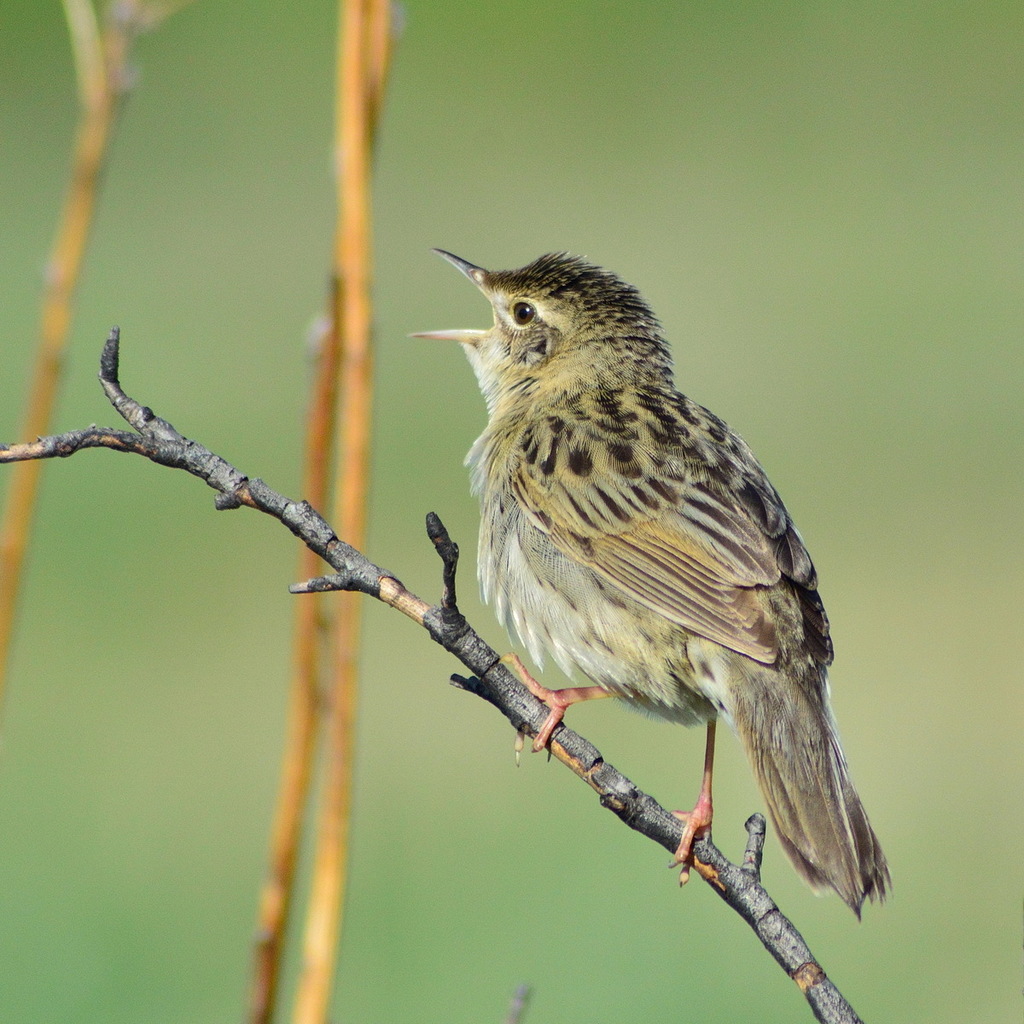
Common Grasshopper Warbler
Locustella naevia
Also known as: Grasshopper Warbler
Habitat
Understory
Diet
Invertebrate
Active Time
Diurnal
Size
13 g
About This Species
Listen for its unmistakable mechanical reeling song, often delivered from deep within dense grassland, scrub or young plantation across much of Europe and western Asia, since the bird itself stays hidden low in cover and is rarely seen well. It forages close to the ground on insects, favouring damp, rank vegetation, and singing males are most vocal at dusk and after dark in late spring and early summer. Patience near a singing perch offers the best chance of a brief view as it shifts position.
Ethical Viewing Guidelines
- Stay well back and avoid entering dense grassland cover to search for a singing bird, since flushing it from low vegetation risks trampling nests of this and other ground-nesting species sharing the habitat.
- Nest protection laws apply across its European and Asian breeding range, though specific provisions and enforcement vary by country, so treat any suspected nest site as strictly off-limits.
Seasonal Activity
326,772 sightings · 2000–2026
Citizen science records via GBIF
Classification
- Kingdom
- Animalia
- Phylum
- Chordata
- Class
- Aves
- Order
- Passeriformes
- Family
- Locustellidae
Traits
- Diet
- Invertebrate
- Foraging
- Understory
- Activity
- Diurnal
- Body mass
- 13 g
Photo
(c) Константин Самодуров, some rights reserved (CC BY-NC), uploaded by Константин Самодуров
CC-BY-NC-4.0
Occurrence data from GBIF.