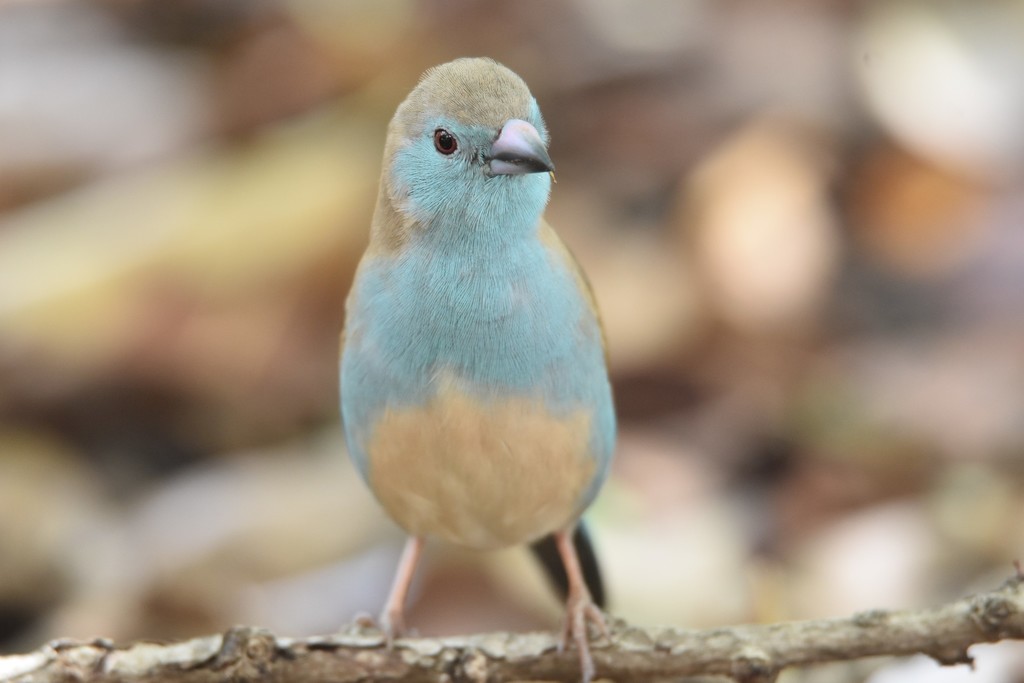
Blue Waxbill
Uraeginthus angolensis
Also known as: Blue-Breasted Cordonbleu, Blue-Breasted Cordon-Bleu, Southern Cordonbleu
Habitat
Ground
Diet
PlantSeed
Active Time
Diurnal
Size
10 g
About This Species
This small finch favours open savanna, thornveld, and grassy edges of woodland across southern Africa, often near water where it feeds on fallen grass seed on bare ground in pairs or small flocks. Its pale sky-blue underparts and face make it easy to pick out low in vegetation or hopping across open dirt patches, and it is most active in the cooler hours around dawn and dusk. Visiting waterholes or garden feeders stocked with seed in the dry season often produces the best views.
Ethical Viewing Guidelines
- Keeping several metres back and staying still lets these tame, confiding birds continue feeding rather than scattering.
- It has no special conservation status and is not individually protected by name in most range states, but general provincial and national wildlife ordinances across southern Africa restrict disturbance, capture, or removal of wild birds.
- Avoid crowding shared waterholes, since flushing birds repeatedly from a scarce water source in the dry season carries a real cost even for a common species.
Seasonal Activity
207,658 sightings · 2000–2026
Citizen science records via GBIF
Classification
- Kingdom
- Animalia
- Phylum
- Chordata
- Class
- Aves
- Order
- Passeriformes
- Family
- Estrildidae
Traits
- Diet
- PlantSeed
- Foraging
- Ground
- Activity
- Diurnal
- Body mass
- 10 g
Photo
(c) Justin Ponder, some rights reserved (CC BY), uploaded by Justin Ponder
CC-BY-4.0
Occurrence data from GBIF.