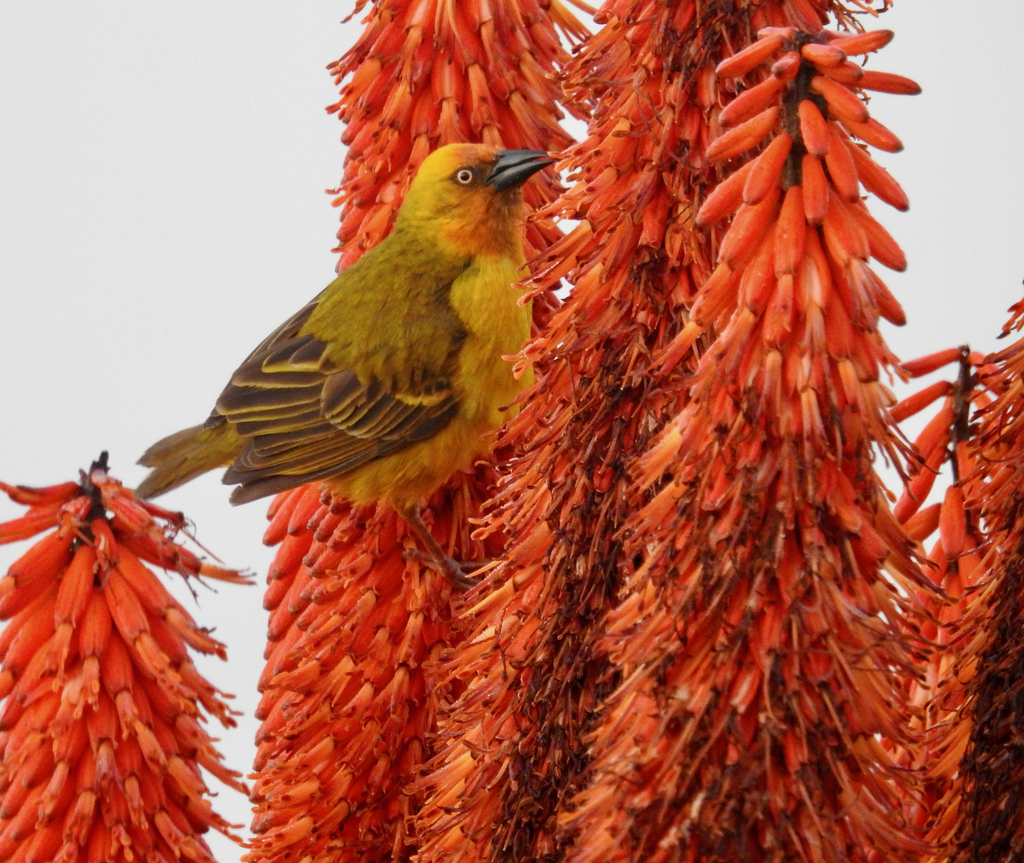
Cape Weaver
Ploceus capensis
Habitat
Ground
Diet
Omnivore
Active Time
Diurnal
Size
44 g
About This Species
This South African endemic favours reedbeds, wetland edges and farmland, where males weave intricate hanging nests over water in noisy breeding colonies. Bright yellow males with a olive-brown eye stripe are easiest to spot during the breeding season when colonies are active and vocal, while duller streaky females are harder to pick out. Listen for a scratchy, chattering song from stands of reeds or overhanging branches near water.
Ethical Viewing Guidelines
- View colonies from the bank or a path rather than wading into reedbeds, since disturbance near a nesting colony can cause birds to desert nests mid-build.
- Wetland birds are covered by wildlife protection laws in South Africa, and enforcement and specific provisions can differ between provinces and reserves, so it is worth checking local rules where you are visiting.
- Keeping well back with binoculars gives a better view of colony activity than approaching closely in any case.
LCAvesPasseriformesPloceidae
Seasonal Activity
227,447 sightings · 2000–2026
Citizen science records via GBIF
All monthsThis month
Classification
- Kingdom
- Animalia
- Phylum
- Chordata
- Class
- Aves
- Order
- Passeriformes
- Family
- Ploceidae
Traits
- Diet
- Omnivore
- Foraging
- Ground
- Activity
- Diurnal
- Body mass
- 44 g
Photo
(c) owlice, some rights reserved (CC BY-NC)
CC-BY-NC-4.0
Occurrence data from GBIF.