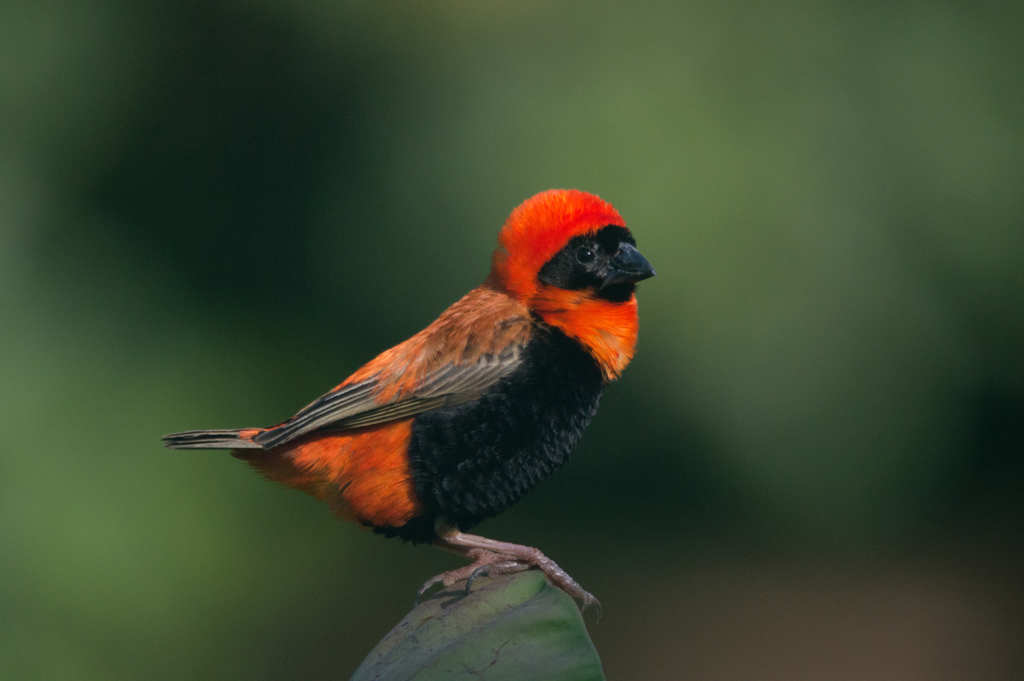
Southern Red Bishop
Euplectes orix
Also known as: Red Bishop
Habitat
Canopy
Diet
Omnivore
Active Time
Diurnal
Size
23 g
About This Species
Breeding males are unmistakable in bright red-and-black plumage, weaving globe-shaped nests low over reeds and rank vegetation at the edges of marshes and wetlands across sub-Saharan Africa. Look for males displaying with fluffed feathers and buzzy, chattering song to attract several females to their nest cluster. This colourful display plumage is seasonal, tied to the local rains, so females and non-breeding males are far drabber and easily overlooked outside that window.
Ethical Viewing Guidelines
- Stay back from reedbeds during the breeding season so displaying males and nesting females are not flushed, since repeated disturbance can cause a colony to abandon nests.
- Wetland birds and their nests are protected under wildlife legislation in most range states, though the specifics vary by country, so treat active colonies as off-limits to close approach rather than assuming a fixed legal distance.
- Viewing from a path or hide at the marsh edge is usually enough to see the display well.
LCAvesPasseriformesPloceidae
Seasonal Activity
349,561 sightings · 2000–2026
Citizen science records via GBIF
All monthsThis month
Classification
- Kingdom
- Animalia
- Phylum
- Chordata
- Class
- Aves
- Order
- Passeriformes
- Family
- Ploceidae
Traits
- Diet
- Omnivore
- Foraging
- Canopy
- Activity
- Diurnal
- Body mass
- 23 g
Photo
(c) Calvin Harris, some rights reserved (CC BY-NC-SA), uploaded by Calvin Harris
CC-BY-NC-SA-4.0
Occurrence data from GBIF.