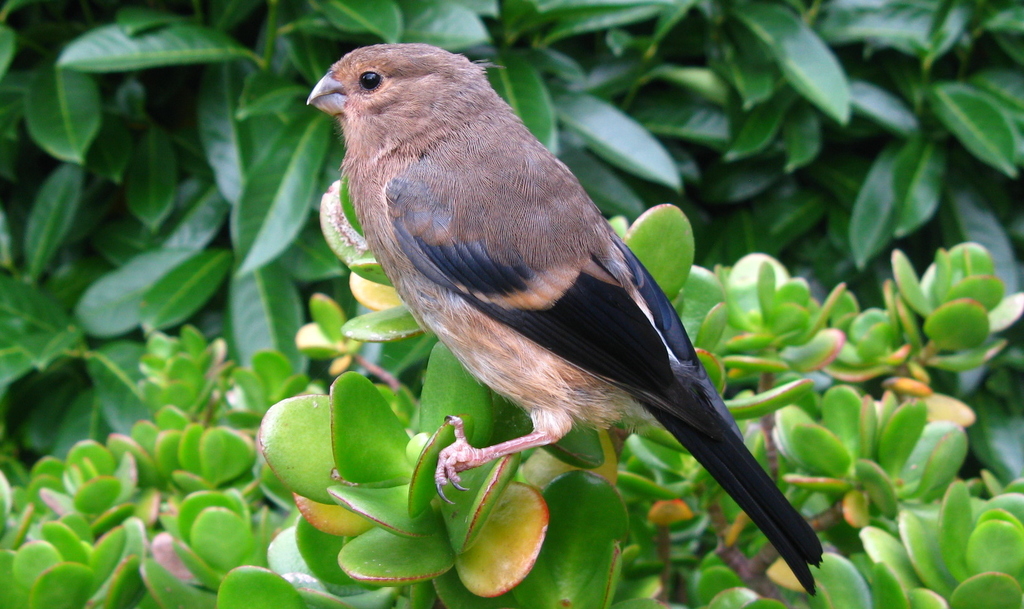
Eurasian Bullfinch
Pyrrhula pyrrhula
Also known as: Bullfinch, Common Bullfinch, Northern Bullfinch
Habitat
Understory
Diet
PlantSeed
Active Time
Diurnal
Size
24 g
About This Species
A stocky, shy finch of woodland edges and mature hedgerows, the male's rose-pink underparts and black cap are distinctive but it tends to stay low and half-hidden in dense cover. Its presence is often given away first by a soft, low 'phew' whistle rather than by sight. Late winter and early spring are good times to look for it, when pairs move along hedgerows feeding on tree buds before leaves fill in and the birds become harder to see.
Ethical Viewing Guidelines
- This is a naturally retiring species that will simply retreat deeper into cover if approached, so quiet, still watching from a short distance works far better than trying to close the gap.
- It is protected from deliberate disturbance at the nest under wildlife law across its range, and because it nests low in dense hedges, care should be taken not to linger near likely nesting cover in spring and summer.
- Watching from a path with binoculars, rather than pushing into hedgerows, is both more productive and less disruptive.
LCAvesPasseriformesFringillidae
Seasonal Activity
2,479,648 sightings · 2000–2026
Citizen science records via GBIF
All monthsThis month
Classification
- Kingdom
- Animalia
- Phylum
- Chordata
- Class
- Aves
- Order
- Passeriformes
- Family
- Fringillidae
Traits
- Diet
- PlantSeed
- Foraging
- Understory
- Activity
- Diurnal
- Body mass
- 24 g
Photo
(c) michi1, some rights reserved (CC BY-NC), uploaded by michi1
CC-BY-NC-4.0
Occurrence data from GBIF.