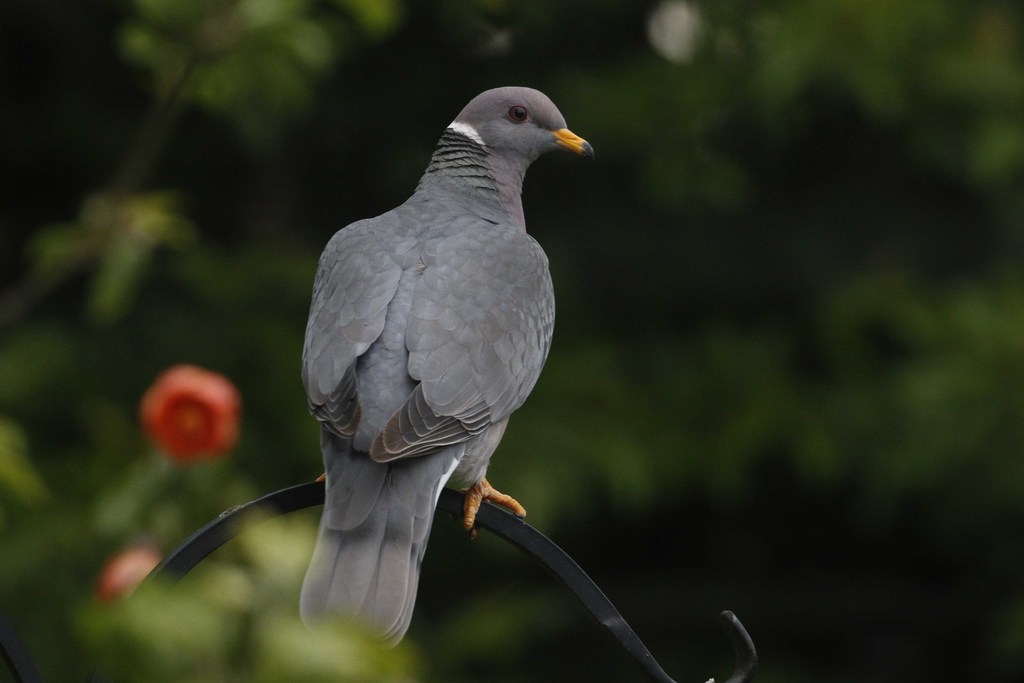
Band-Tailed Pigeon
Patagioenas fasciata
Also known as: Northern Band-Tailed Pigeon
About This Species
Search forested and wooded canyon habitat in the western mountains, where flocks move between oak and conifer stands feeding on acorns, berries, and other fruit. Its deep, owl-like hooting call often gives away its presence in the canopy before you spot the bird, and a pale terminal band on the tail is the best field mark in flight. Flocks are most conspicuous in fall and winter when they follow local mast crops, sometimes gathering in large numbers at a good food source.
Ethical Viewing Guidelines
- Observe feeding flocks from a distance with binoculars rather than approaching a tree directly, since a startled flock will simply move on and you lose the view.
- In the United States it is protected under the Migratory Bird Treaty Act, while other range countries have their own wildlife statutes, so do not assume identical rules apply everywhere it occurs.
- Avoid disturbing roost or nest trees, particularly during the breeding season.
LCAvesColumbiformesColumbidae
Seasonal Activity
951,341 sightings · 2000–2026
Citizen science records via GBIF
All monthsThis month
Classification
- Kingdom
- Animalia
- Phylum
- Chordata
- Class
- Aves
- Order
- Columbiformes
- Family
- Columbidae
Photo
(c) Donna Pomeroy, some rights reserved (CC BY-NC), uploaded by Donna Pomeroy
CC-BY-NC-4.0
Occurrence data from GBIF.