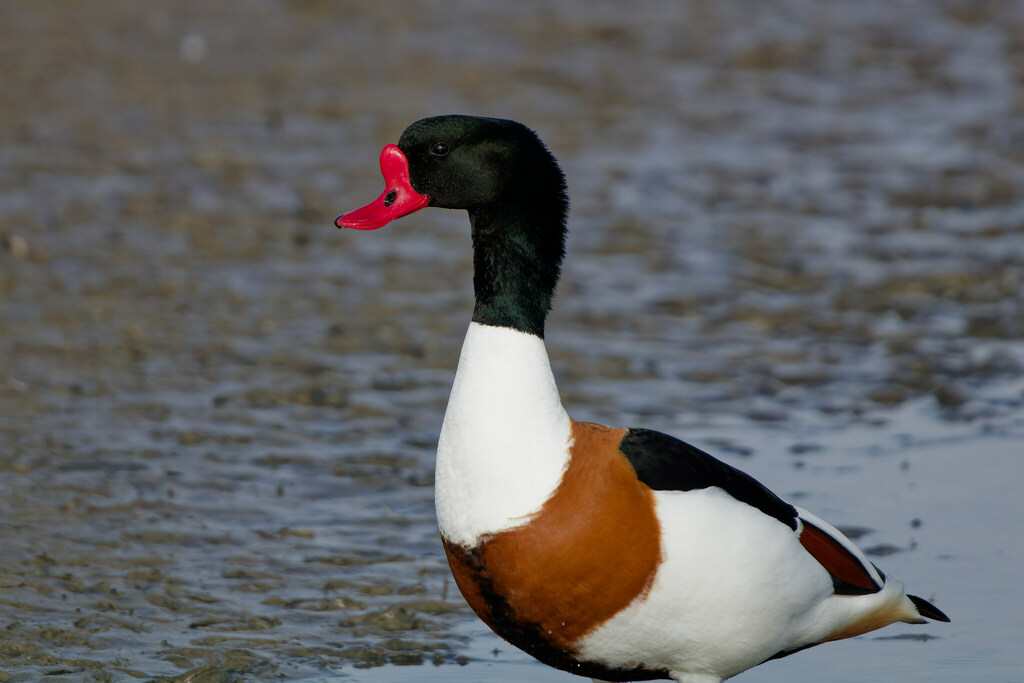
Common Shelduck
Tadorna tadorna
Also known as: Shelduck
Habitat
Aquatic
Diet
Invertebrate
Active Time
Diurnal
Size
1.1 kg
About This Species
Look for this brightly patterned duck on estuaries, salt marshes and coastal mudflats, where it sweeps its bill side to side through shallow water and soft mud to filter out invertebrates. It is often seen in pairs or small flocks, and numbers swell in autumn and winter as birds gather to moult and feed on tidal flats. Early morning or a falling tide, when mudflats are exposed, offers the most reliable viewing.
Ethical Viewing Guidelines
- Watch from a hide, path, or vehicle at a distance of at least 50 metres rather than walking out onto open mudflats, which flushes feeding and moulting birds and wastes energy they need for winter survival.
- This species and its habitat are protected under wetland and wildfowl conservation law in much of its European and Asian range, though specific protections vary by country, so check local guidance before approaching.
- Avoid areas with posted no-disturbance signage during the moulting period, when birds are briefly flightless and especially vulnerable.
LCAvesAnseriformesAnatidae
Seasonal Activity
2,316,013 sightings · 2000–2026
Citizen science records via GBIF
All monthsThis month
Classification
- Kingdom
- Animalia
- Phylum
- Chordata
- Class
- Aves
- Order
- Anseriformes
- Family
- Anatidae
Traits
- Diet
- Invertebrate
- Foraging
- Aquatic
- Activity
- Diurnal
- Body mass
- 1.1 kg
Photo
(c) thegreatdodo, some rights reserved (CC BY-NC), uploaded by thegreatdodo
CC-BY-NC-4.0
Occurrence data from GBIF.