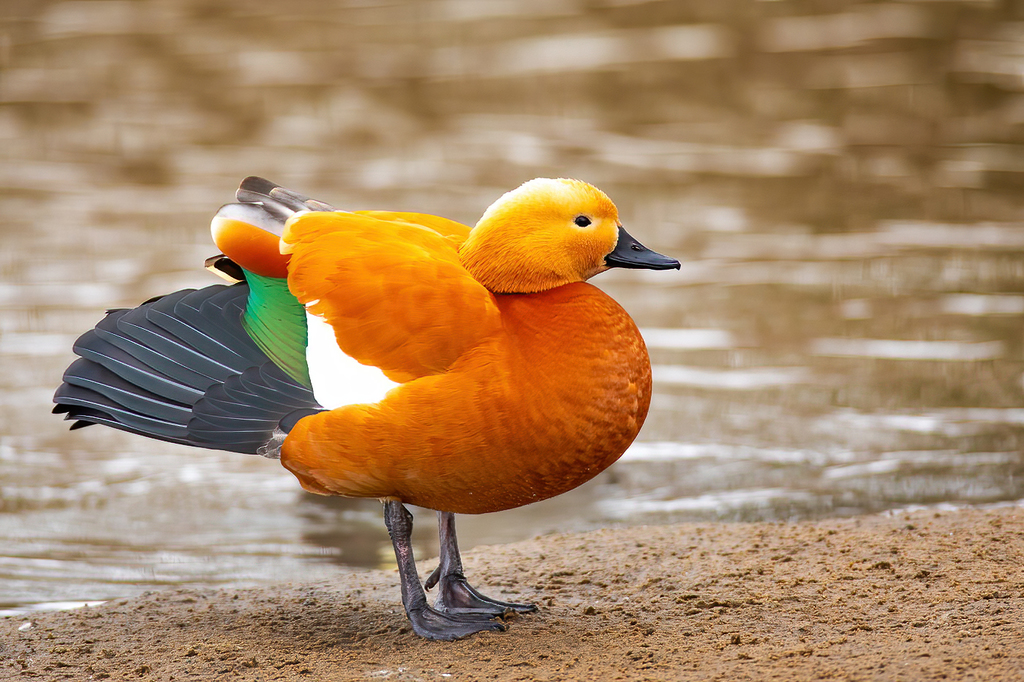
Ruddy Shelduck
Tadorna ferruginea
Habitat
Aquatic
Diet
PlantSeed
Active Time
Diurnal
Size
1.2 kg
About This Species
Found on lakes, rivers and wetlands across Eurasia and North Africa, often nesting in burrows or cavities well away from open water. The orange-brown body, pale head and loud honking calls make it easy to identify, usually in pairs or small groups. Winter brings larger flocks to wetland sites, while the breeding season offers a chance to see pairs near cliffs or burrows further from water.
Ethical Viewing Guidelines
- Protected under bird conservation law in its European range and under national wildlife legislation elsewhere, with specifics varying by country.
- Shelducks are notably wary, so keep a generous distance from nesting pairs and especially from moulting flocks, which are flightless and vulnerable to disturbance for several weeks.
LCAvesAnseriformesAnatidae
Seasonal Activity
370,585 sightings · 2000–2026
Citizen science records via GBIF
All monthsThis month
Classification
- Kingdom
- Animalia
- Phylum
- Chordata
- Class
- Aves
- Order
- Anseriformes
- Family
- Anatidae
Traits
- Diet
- PlantSeed
- Foraging
- Aquatic
- Activity
- Diurnal
- Body mass
- 1.2 kg
Photo
(c) egorbirder, some rights reserved (CC BY)
CC-BY-4.0
Occurrence data from GBIF.