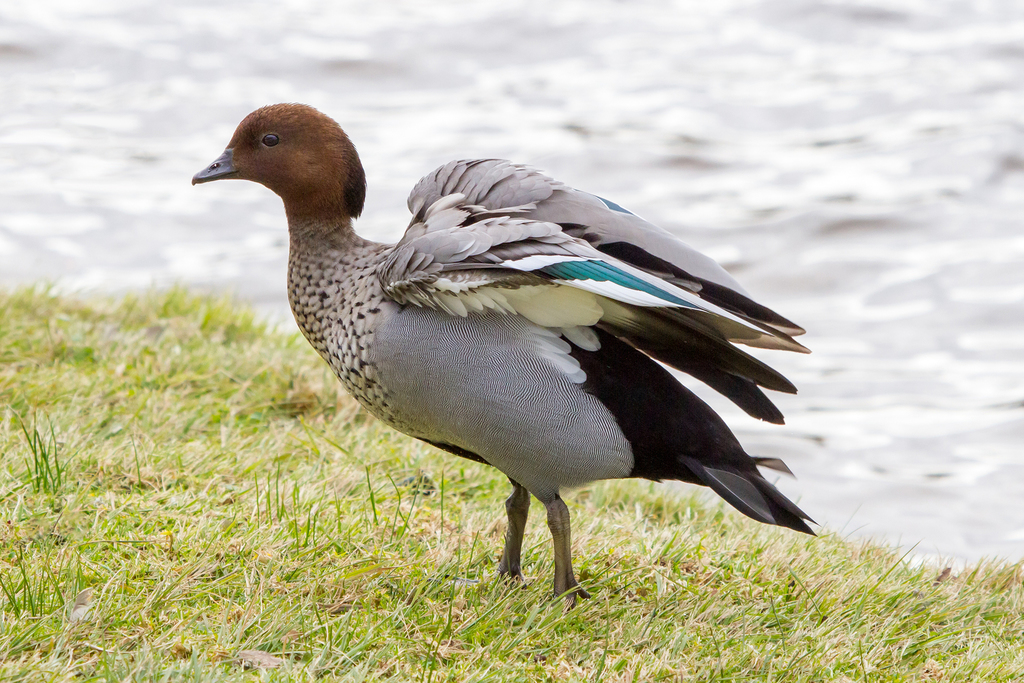
Maned Duck
Chenonetta jubata
Also known as: Australian Wood Duck, Maned Goose
Habitat
Ground
Diet
PlantSeed
Active Time
Diurnal
Size
807 g
About This Species
Grazes on grass and pasture like a goose rather than dabbling in water, often found well away from wetlands in paddocks, parks and golf courses across Australia. Most active at dawn and dusk, when small flocks gather to feed on short grass, and pairs can be told apart by the male's darker head and shaggy nape. Look for it year-round, though numbers swell locally after rain fills inland waterholes.
Ethical Viewing Guidelines
- A distance of 20-30 metres is normally enough to avoid disturbing feeding or resting birds, with more room given around any nest or brood of ducklings.
- It is protected native wildlife under Australian state legislation, so deliberate harassment, capture or nest disturbance is prohibited.
- Avoid approaching directly or crowding a flock, and give ducklings a wide berth since parents can abandon broods under repeated pressure.
LCAvesAnseriformesAnatidae
Seasonal Activity
830,578 sightings · 2000–2026
Citizen science records via GBIF
All monthsThis month
Classification
- Kingdom
- Animalia
- Phylum
- Chordata
- Class
- Aves
- Order
- Anseriformes
- Family
- Anatidae
Traits
- Diet
- PlantSeed
- Foraging
- Ground
- Activity
- Diurnal
- Body mass
- 807 g
Photo
(c) Ashley M Bradford, some rights reserved (CC BY-NC), uploaded by Ashley M Bradford
CC-BY-NC-4.0
Occurrence data from GBIF.