Common Scoter
Melanitta nigra
Habitat
Aquatic
Diet
Invertebrate
Active Time
Diurnal
Size
1.0 kg
About This Species
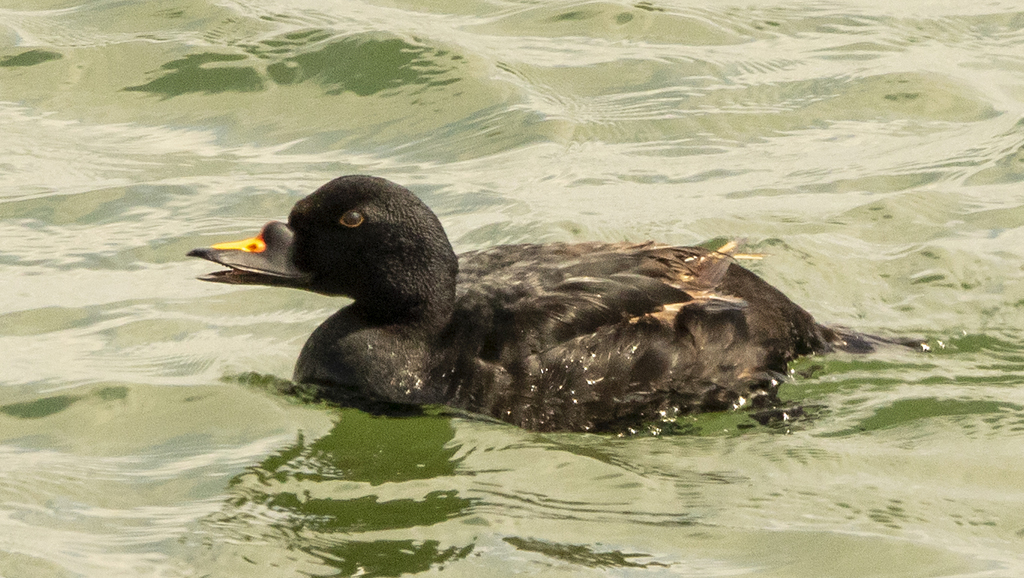
A diving seaduck, it dives for mussels and other shellfish in nearshore coastal waters, often forming large rafts offshore that can be scanned with a scope from headlands and seawatch points. Winter is the best season to see it in coastal waters, where flocks of mostly black males with a distinctive yellow bill patch are conspicuous among mixed seaduck rafts, particularly during active feeding bouts.
Ethical Viewing Guidelines
- Viewing from shore with binoculars or a scope avoids disturbing rafting or diving flocks, and boats should keep well clear of concentrations of feeding or moulting birds, since seaducks are vulnerable to disturbance during flightless moult periods.
- Coastal and marine protected areas covering its range often carry specific vessel approach rules, and these vary by country, so check local guidance before approaching by boat.
- Avoid direct approach by any watercraft toward dense rafts.
LCAvesAnseriformesAnatidae
Seasonal Activity
834,928 sightings · 2000–2026
Citizen science records via GBIF
All monthsThis month
Classification
- Kingdom
- Animalia
- Phylum
- Chordata
- Class
- Aves
- Order
- Anseriformes
- Family
- Anatidae
Traits
- Diet
- Invertebrate
- Foraging
- Aquatic
- Activity
- Diurnal
- Body mass
- 1.0 kg
Photo
(c) albissers_grund, some rights reserved (CC BY-NC), uploaded by albissers_grund
CC-BY-NC-4.0
Occurrence data from GBIF.