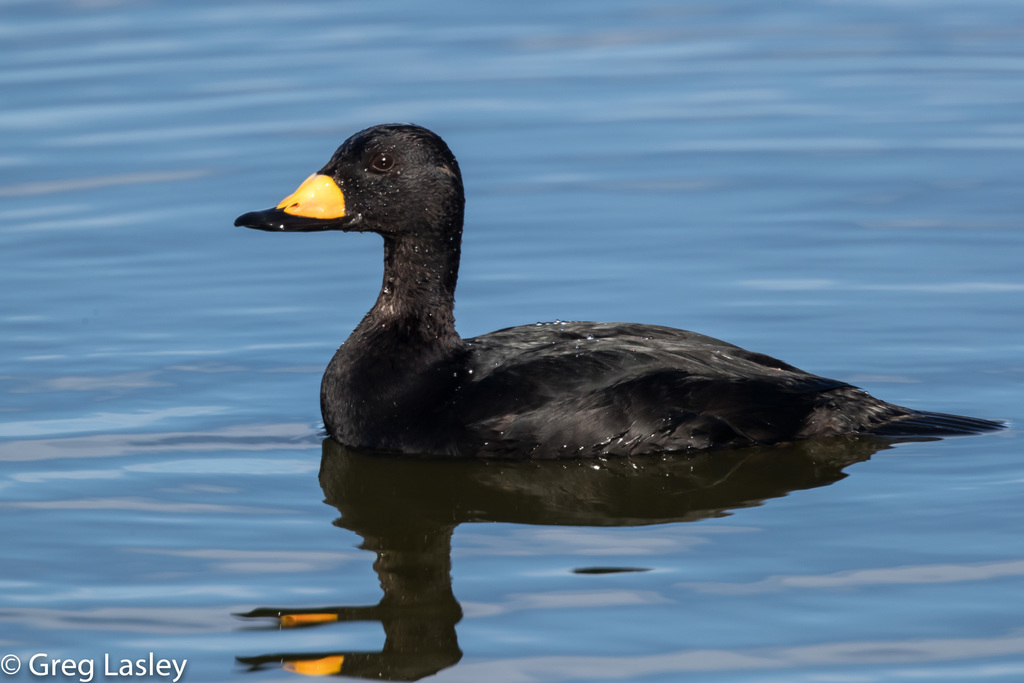
Black Scoter
Melanitta americana
Also known as: American Scoter
About This Species
Look for rafts of this dark sea duck riding nearshore swells and diving for mollusks along northern coastlines in winter, often mixed with other scoter species. Breeding birds use remote Arctic and subarctic tundra pools in North America and Siberia, largely inaccessible to casual viewing. Winter along open coasts, especially on calm mornings with good light on the water, offers the most reliable views of feeding and resting flocks.
Ethical Viewing Guidelines
- Because it is listed as Near Threatened, keep well back from rafts — 50 metres or more from a boat or shoreline — rather than drawing closer, since repeated flushing costs birds energy they need for winter survival.
- It is protected under the Migratory Bird Treaty Act in North America and under comparable migratory bird protections across much of its Eurasian range, though exact rules differ by country.
- Avoid approaching molting flocks in particular, when birds are flightless and especially vulnerable to disturbance.
NTAvesAnseriformesAnatidae
Seasonal Activity
554,744 sightings · 2000–2026
Citizen science records via GBIF
All monthsThis month
Classification
- Kingdom
- Animalia
- Phylum
- Chordata
- Class
- Aves
- Order
- Anseriformes
- Family
- Anatidae
Photo
(c) Greg Lasley, some rights reserved (CC BY-NC), uploaded by Greg Lasley
CC-BY-NC-4.0
Occurrence data from GBIF.