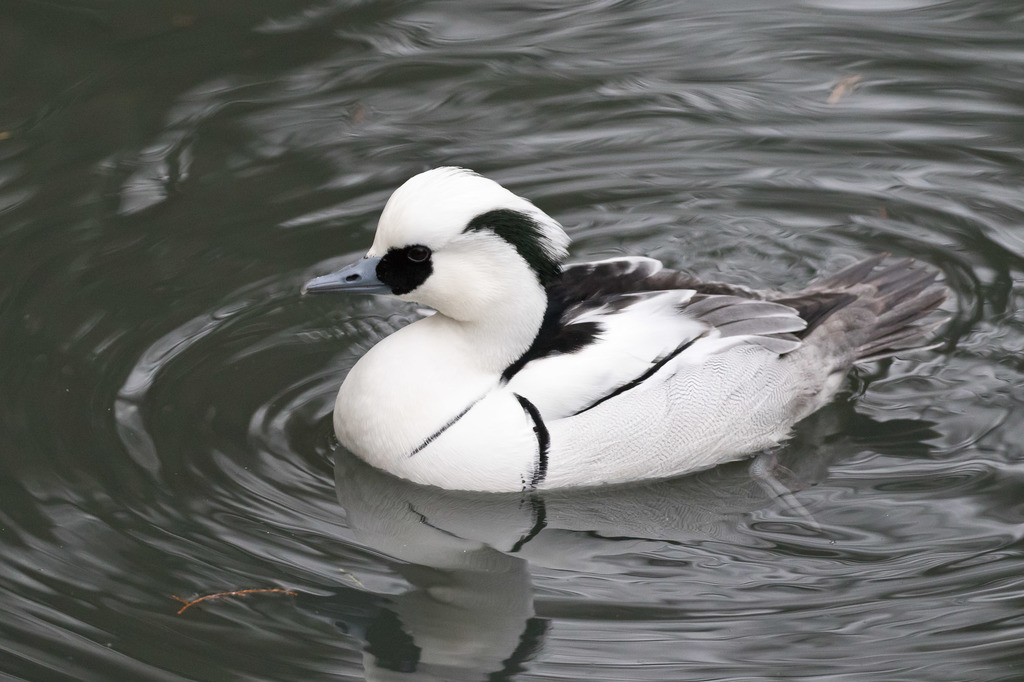
Smew
Mergellus albellus
Habitat
Aquatic
Diet
Invertebrate
Active Time
Diurnal
Size
609 g
About This Species
This small, crested diving duck favours sheltered lakes, reservoirs and estuaries, where it dives repeatedly for small fish and aquatic invertebrates, often in loose flocks with other diving ducks. Males are strikingly white with fine black markings, easiest to pick out on calm winter mornings when the water is still and the light is low. Winter is the best season across most of its range, since it breeds far north in Siberian taiga and only appears on more accessible waters once it moves south to escape freezing conditions.
Ethical Viewing Guidelines
- View from a shoreline, hide or boat at a distance that does not cause the flock to bunch up or swim away, generally 30 metres or more on open water.
- Wildfowl are protected to varying degrees across the countries it winters in, with specific rules on disturbance and hunting seasons differing by jurisdiction, so check local regulations rather than assuming one country's protections apply elsewhere.
- Avoid approaching directly or by boat engine noise, since repeated flushing from a wintering site costs the birds energy they need to survive the season.
Seasonal Activity
642,842 sightings · 2000–2026
Citizen science records via GBIF
Classification
- Kingdom
- Animalia
- Phylum
- Chordata
- Class
- Aves
- Order
- Anseriformes
- Family
- Anatidae
Traits
- Diet
- Invertebrate
- Foraging
- Aquatic
- Activity
- Diurnal
- Body mass
- 609 g
Photo
(c) Greg Lasley, some rights reserved (CC BY-NC), uploaded by Greg Lasley
CC-BY-NC-4.0
Occurrence data from GBIF.