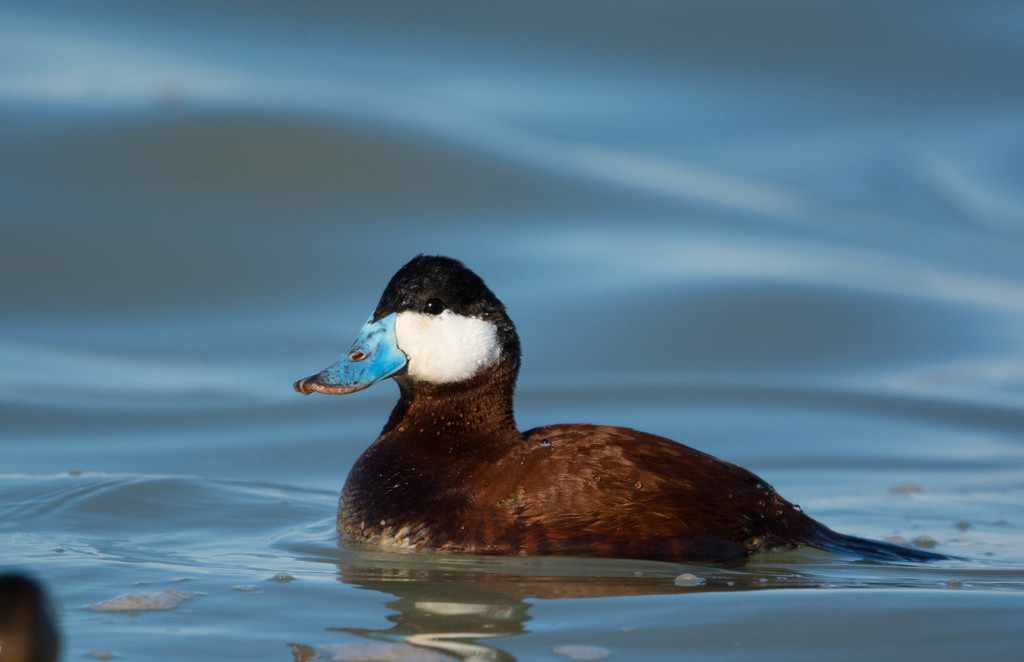
Ruddy Duck
Oxyura jamaicensis
Also known as: Ruddyduck
Habitat
Aquatic
Diet
Invertebrate
Active Time
Diurnal
Size
608 g
About This Species
A small, stiff-tailed diving duck found on ponds, lakes, and reservoirs, most conspicuous in the breeding season when males turn a rich chestnut with a bright blue bill and perform a bubbling courtship display with the tail cocked upright. Outside the breeding season it is duller gray-brown and often overlooked among rafts of other diving ducks, so late spring through summer is the best time to pick out displaying males. It dives frequently and spends long stretches underwater, so patience helps when trying to relocate an individual.
Ethical Viewing Guidelines
- Viewing from shore with binoculars or a scope is sufficient and preferable to approaching by boat, since diving ducks that are repeatedly flushed expend energy that affects body condition.
- Protections under migratory bird treaty law apply across its native North American range, while in parts of Europe, where it is introduced, control programs exist for conservation reasons unrelated to disturbance law, so approach etiquette should follow local wetland guidance.
- Keeping noise and boat wake to a minimum near breeding females with broods is the main precaution worth taking.
Seasonal Activity
2,865,344 sightings · 2000–2026
Citizen science records via GBIF
Classification
- Kingdom
- Animalia
- Phylum
- Chordata
- Class
- Aves
- Order
- Anseriformes
- Family
- Anatidae
Traits
- Diet
- Invertebrate
- Foraging
- Aquatic
- Activity
- Diurnal
- Body mass
- 608 g
Photo
(c) Jacob Collison, some rights reserved (CC BY-NC), uploaded by Jacob Collison
CC-BY-NC-4.0
Occurrence data from GBIF.