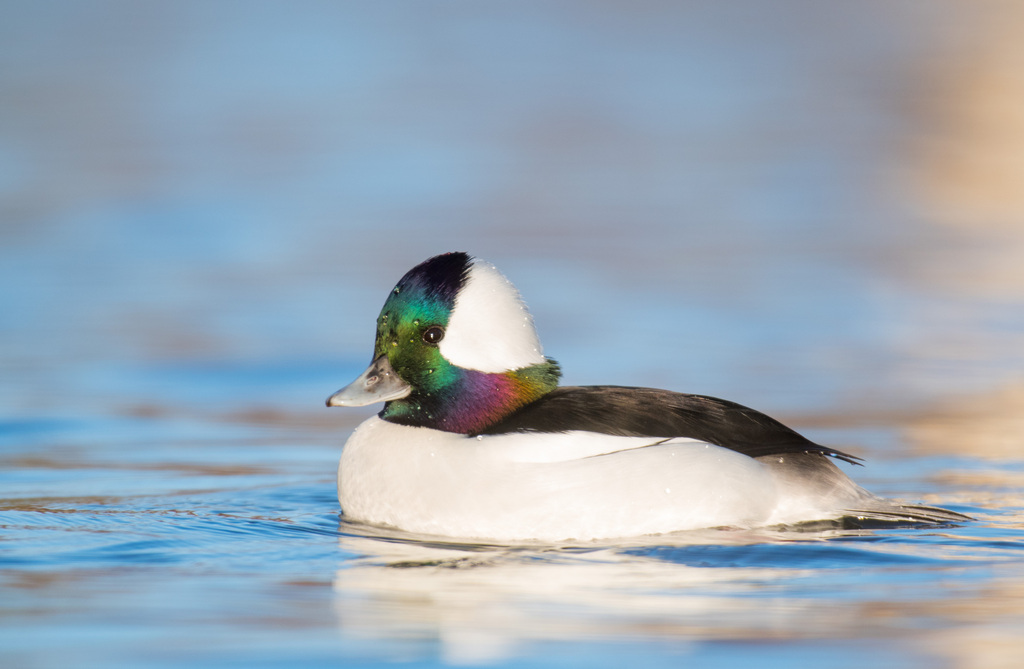
Bufflehead
Bucephala albeola
Habitat
Aquatic
Diet
Invertebrate
Active Time
Diurnal
Size
397 g
About This Species
The smallest diving duck in North America, easily recognised by the male's bold black-and-white plumage and large white patch wrapping around the back of the head. It favours small ponds, sheltered bays and slow rivers, diving frequently for aquatic invertebrates and often associating in small, tight-knit flocks. Winter is the best season to see it in most of its range, when birds concentrate on ice-free water and the male's striking pattern stands out clearly against dark water.
Ethical Viewing Guidelines
- A generally tolerant species on open water, though it will swim away rather than fly if pressed, so watching from a fixed position on shore with binoculars is more productive and less disruptive than following along the bank.
- Give nesting females and broods extra space, since this species nests in tree cavities near water and ducklings are vulnerable during their first swim to cover.
- Boat traffic and shoreline activity should slow and give distance to any group showing signs of alarm, such as bunching or repeated diving.
LCAvesAnseriformesAnatidae
Seasonal Activity
4,952,796 sightings · 2000–2026
Citizen science records via GBIF
All monthsThis month
Classification
- Kingdom
- Animalia
- Phylum
- Chordata
- Class
- Aves
- Order
- Anseriformes
- Family
- Anatidae
Traits
- Diet
- Invertebrate
- Foraging
- Aquatic
- Activity
- Diurnal
- Body mass
- 397 g
Photo
(c) ianhearn, some rights reserved (CC BY-NC)
CC-BY-NC-4.0
Occurrence data from GBIF.