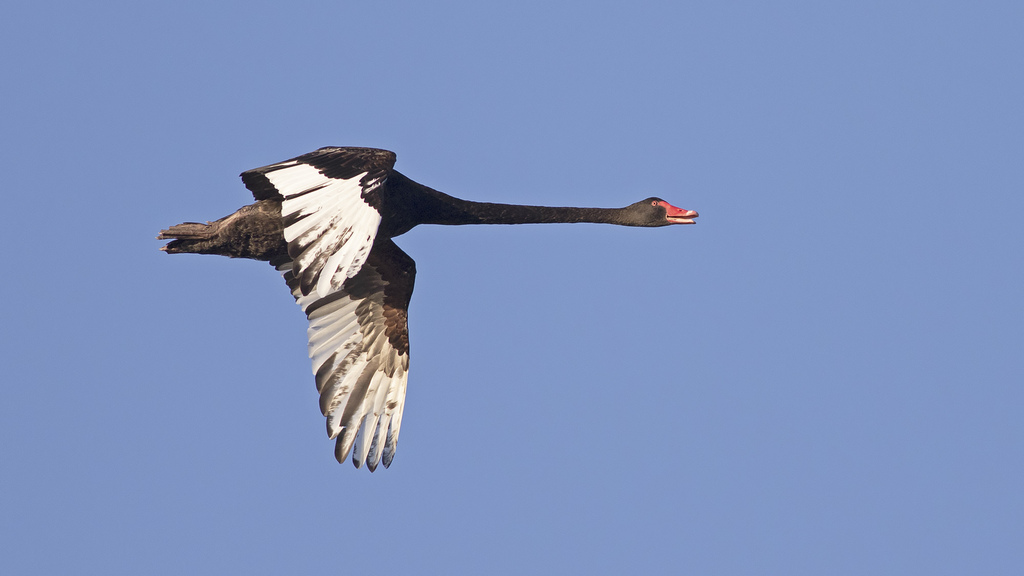
Black Swan
Cygnus atratus
Habitat
Aquatic
Diet
PlantSeed
Active Time
Diurnal
Size
5.6 kg
About This Species
A large, all-black waterbird native to Australia and now established in other regions, it grazes on aquatic vegetation in lakes, wetlands and slow rivers, often in sizeable flocks, and is easily identified by its curled wing feathers and red bill. It is conspicuous year-round, though large moulting and breeding congregations on open water are especially easy to observe in spring and summer. Look for its habit of upending in shallow water to reach submerged plants.
Ethical Viewing Guidelines
- Give nesting pairs and cygnets a wide berth, since swans can become aggressive when defending a nest or young and may charge or strike if approached too closely, particularly on land.
- It is not considered threatened and protections vary by location, from general waterbird protection laws in Australia to more limited status where it has been introduced elsewhere, so check local rules rather than assuming protected status everywhere.
- Feeding it bread or other human food should be avoided, as it encourages unhealthy dependency and can foul the water it lives in.
LCAvesAnseriformesAnatidae
Seasonal Activity
745,809 sightings · 2000–2026
Citizen science records via GBIF
All monthsThis month
Classification
- Kingdom
- Animalia
- Phylum
- Chordata
- Class
- Aves
- Order
- Anseriformes
- Family
- Anatidae
Traits
- Diet
- PlantSeed
- Foraging
- Aquatic
- Activity
- Diurnal
- Body mass
- 5.6 kg
Photo
(c) Steve Murray, some rights reserved (CC BY-NC), uploaded by Steve Murray
CC-BY-NC-4.0
Occurrence data from GBIF.