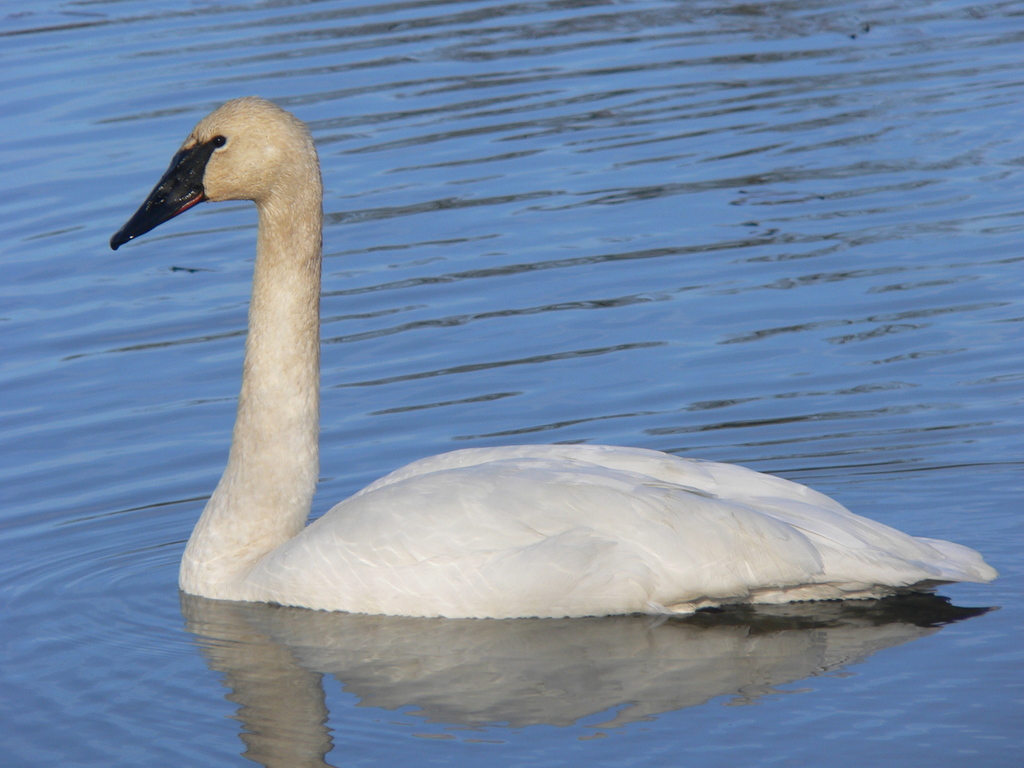
Trumpeter Swan
Cygnus buccinator
Habitat
Aquatic
Diet
PlantSeed
Active Time
Diurnal
Size
11.1 kg
About This Species
North America's largest native waterfowl, this swan breeds on remote lakes and wetlands and winters on open water and flooded fields further south, often in family groups. Look for its all-white plumage, black bill, and deep, trumpeting call, and watch for its powerful, slow wingbeats in flight. Late autumn through winter, when birds gather at traditional wintering sites, offers the most reliable and often closest views.
Ethical Viewing Guidelines
- Give feeding and roosting flocks generous space, since swans that repeatedly take flight from disturbance burn valuable energy reserves during winter.
- In the US and Canada it is protected under federal migratory bird law, and approaching too closely, especially at nest sites in the breeding range, risks flushing birds off eggs.
- Viewing from a vehicle or fixed point at a wintering site, rather than walking toward a flock, is the standard low-disturbance approach recommended at most refuges.
LCAvesAnseriformesAnatidae
Seasonal Activity
1,015,094 sightings · 2000–2026
Citizen science records via GBIF
All monthsThis month
Classification
- Kingdom
- Animalia
- Phylum
- Chordata
- Class
- Aves
- Order
- Anseriformes
- Family
- Anatidae
Traits
- Diet
- PlantSeed
- Foraging
- Aquatic
- Activity
- Diurnal
- Body mass
- 11.1 kg
Photo
(c) belyykit, some rights reserved (CC BY-NC), uploaded by belyykit
CC-BY-NC-4.0
Occurrence data from GBIF.