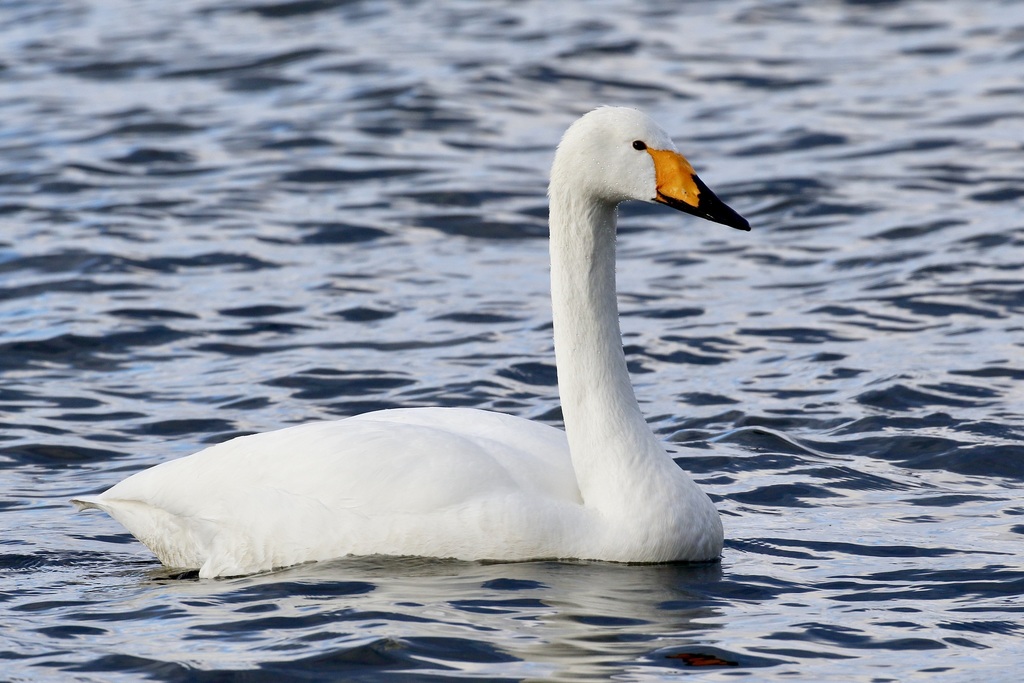
Whooper Swan
Cygnus cygnus
Habitat
Aquatic
Diet
PlantSeed
Active Time
Diurnal
Size
9.3 kg
About This Species
Look for a large, all-white swan with a wedge-shaped yellow-and-black bill on lakes, estuaries and flooded fields, often in family groups or larger winter flocks. Its far-carrying, bugling call is a good way to locate a flock before you see it, especially in flight. Best looked for in winter across much of its non-breeding range, when birds gather at traditional roost sites and feeding grounds.
Ethical Viewing Guidelines
- Keep a good distance, at least several tens of metres, and avoid approaching directly or forcing birds to move off water or fields, since flushing a flock wastes energy they need for winter survival.
- Swans are legally protected across most of their range, with additional cultural and statutory protections for this species in parts of Europe, though specific rules differ by country.
- Viewing from a vehicle, hide or the far side of a water body is usually the least disruptive option.
LCAvesAnseriformesAnatidae
Seasonal Activity
2,022,446 sightings · 2000–2026
Citizen science records via GBIF
All monthsThis month
Classification
- Kingdom
- Animalia
- Phylum
- Chordata
- Class
- Aves
- Order
- Anseriformes
- Family
- Anatidae
Traits
- Diet
- PlantSeed
- Foraging
- Aquatic
- Activity
- Diurnal
- Body mass
- 9.3 kg
Photo
(c) Bird Explorers, some rights reserved (CC BY-NC), uploaded by Bird Explorers
CC-BY-NC-4.0
Occurrence data from GBIF.