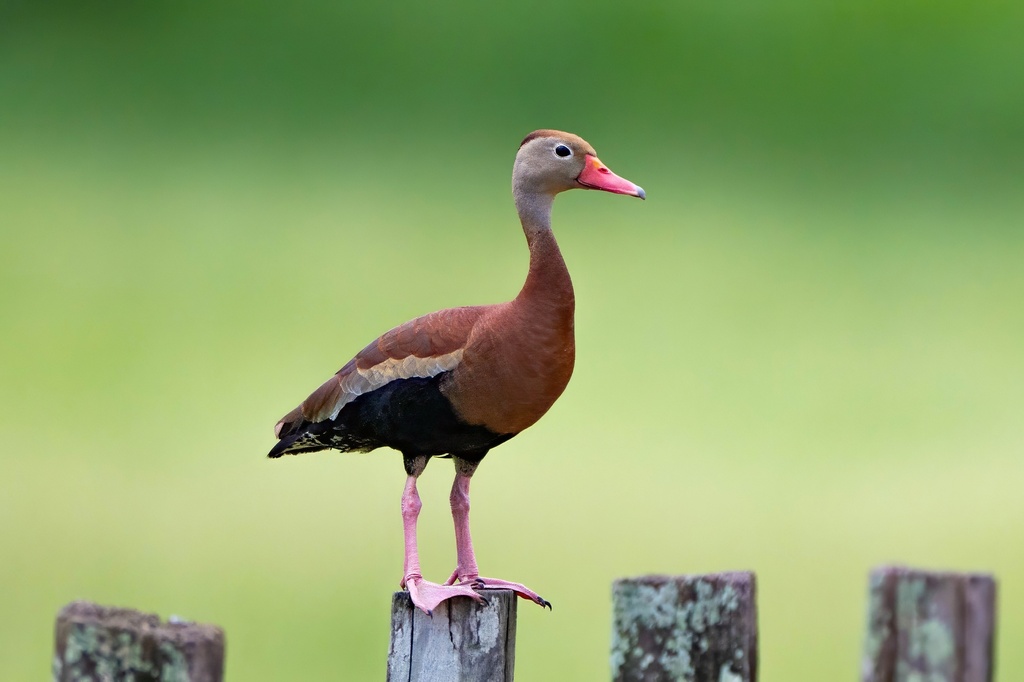
Black-Bellied Whistling Duck
Dendrocygna autumnalis
Also known as: Red-Billed Whistling Duck, Tree Duck, Southern Black-Bellied Whistling Duck, Southern Red-Billed Whistling Duck
Habitat
Aquatic
Diet
PlantSeed
Active Time
Diurnal
Size
755 g
About This Species
Look and listen for noisy flocks of this long-legged duck perched in trees or standing at the edges of ponds, marshes, and flooded fields across the southern United States, Mexico, and Central America, its whistling call a good giveaway even before birds are in view. It is most active at dusk and after dark, feeding in shallow water and on adjacent grass, and often roosts communally in large trees near water during the day. Wetland edges at dawn or dusk in warmer months offer the best viewing.
Ethical Viewing Guidelines
- Keep a distance of at least twenty metres from roosting or feeding flocks, since these are social birds that will flush as a group if startled, wasting energy at a time when many are feeding young.
- Waterfowl and their habitat are protected under wildlife law in the United States and Mexico, though hunting regulations and protected status differ between countries in its range.
- Viewing from a vehicle, blind, or fixed vantage point near a wetland is less disruptive than approaching along the shoreline.
Seasonal Activity
1,118,778 sightings · 2000–2026
Citizen science records via GBIF
Classification
- Kingdom
- Animalia
- Phylum
- Chordata
- Class
- Aves
- Order
- Anseriformes
- Family
- Anatidae
Traits
- Diet
- PlantSeed
- Foraging
- Aquatic
- Activity
- Diurnal
- Body mass
- 755 g
Photo
(c) cello caruso-turiello, some rights reserved (CC BY), uploaded by cello caruso-turiello
CC-BY-4.0
Occurrence data from GBIF.