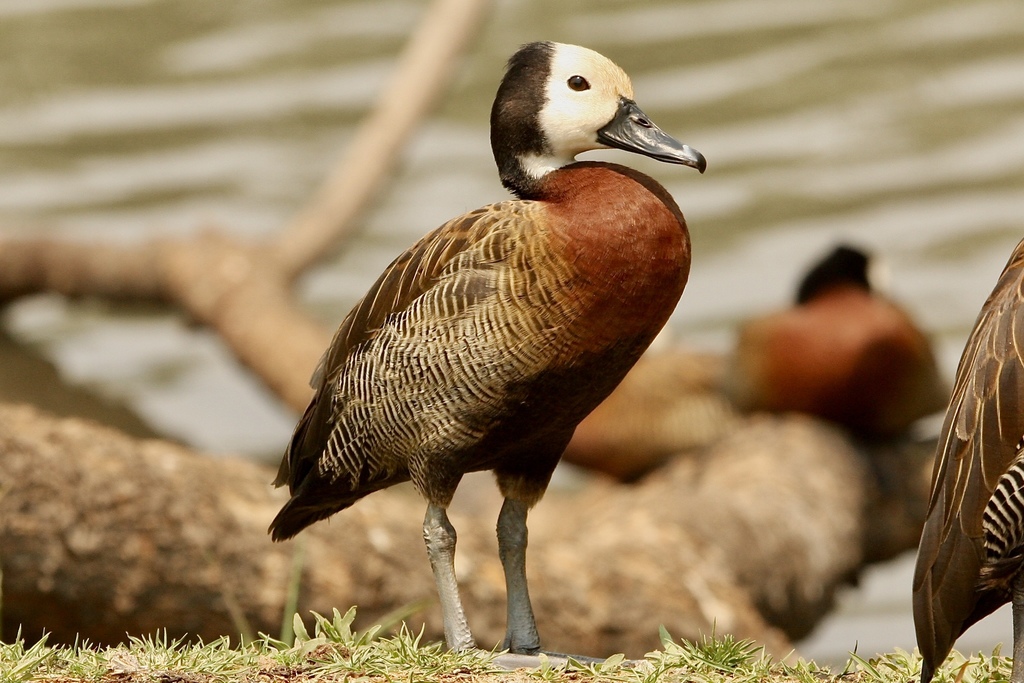
White-Faced Whistling-Duck
Dendrocygna viduata
Also known as: White-Faced Duck, White-Faced Tree-Duck
Habitat
Aquatic
Diet
PlantSeed
Active Time
Diurnal
Size
690 g
About This Species
Look for large, noisy flocks resting on lake edges, flooded grassland and farm dams across sub-Saharan Africa and much of South America, often packed shoulder to shoulder with a few other duck species. The white face and black cap make it easy to pick out even at distance, and the constant high, whistling calls it is named for usually give a flock away before you see it. Activity peaks around dawn and dusk, with birds feeding on submerged vegetation in shallow water and roosting communally by day.
Ethical Viewing Guidelines
- Stay back far enough that the flock keeps feeding or resting normally rather than bunching up or taking flight; a few hundred metres with binoculars or a spotting scope is usually enough on open water.
- Wetland birds are protected under national wildlife laws in most range states, and many key sites sit inside protected reserves with their own access rules, so check local signage rather than assuming a blanket distance.
- Avoid pushing a boat or vehicle straight at a resting flock, since repeated disturbance at roost sites can push birds off a wetland altogether.
Seasonal Activity
253,096 sightings · 2000–2026
Citizen science records via GBIF
Classification
- Kingdom
- Animalia
- Phylum
- Chordata
- Class
- Aves
- Order
- Anseriformes
- Family
- Anatidae
Traits
- Diet
- PlantSeed
- Foraging
- Aquatic
- Activity
- Diurnal
- Body mass
- 690 g
Photo
(c) Bird Explorers, some rights reserved (CC BY-NC), uploaded by Bird Explorers
CC-BY-NC-4.0
Occurrence data from GBIF.