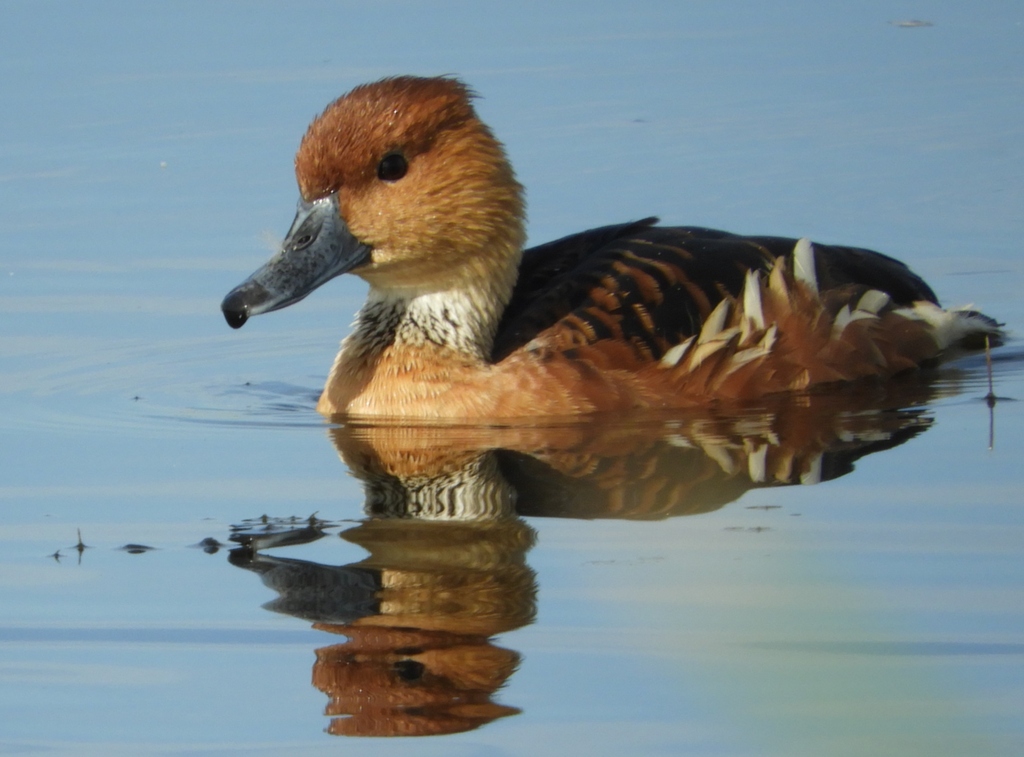
Fulvous Whistling Duck
Dendrocygna bicolor
Also known as: Fulvous Tree-Duck, Fulvous Duck, Fulvous Whisting Duck
Habitat
Aquatic
Diet
PlantSeed
Active Time
Diurnal
Size
756 g
About This Species
This long-necked, long-legged duck favours shallow freshwater wetlands, flooded rice fields and marsh edges through the tropics and subtropics, where it dabbles and up-ends for seeds and aquatic plants. It is most active around dawn and dusk, often heard before it is seen thanks to a distinctive, whistling call given in flight. Large flocks can gather outside the breeding season, making wetland edges and paddy margins the best places to scan at low light.
Ethical Viewing Guidelines
- Approach wetland edges slowly and stay on established paths or levees rather than wading into the marsh, since flushing a flock wastes the birds' energy and can scatter families with young.
- Keep a wide, quiet distance from any nest or brood, as adults will abandon feeding to shepherd ducklings away from disturbance.
- Wetland birds are protected under national or regional laws in much of this species' range, so check local rules before entering marsh habitat.
Seasonal Activity
156,717 sightings · 2000–2026
Citizen science records via GBIF
Classification
- Kingdom
- Animalia
- Phylum
- Chordata
- Class
- Aves
- Order
- Anseriformes
- Family
- Anatidae
Traits
- Diet
- PlantSeed
- Foraging
- Aquatic
- Activity
- Diurnal
- Body mass
- 756 g
Photo
(c) C. Phillips, some rights reserved (CC BY-NC), uploaded by C. Phillips
CC-BY-NC-4.0
Occurrence data from GBIF.