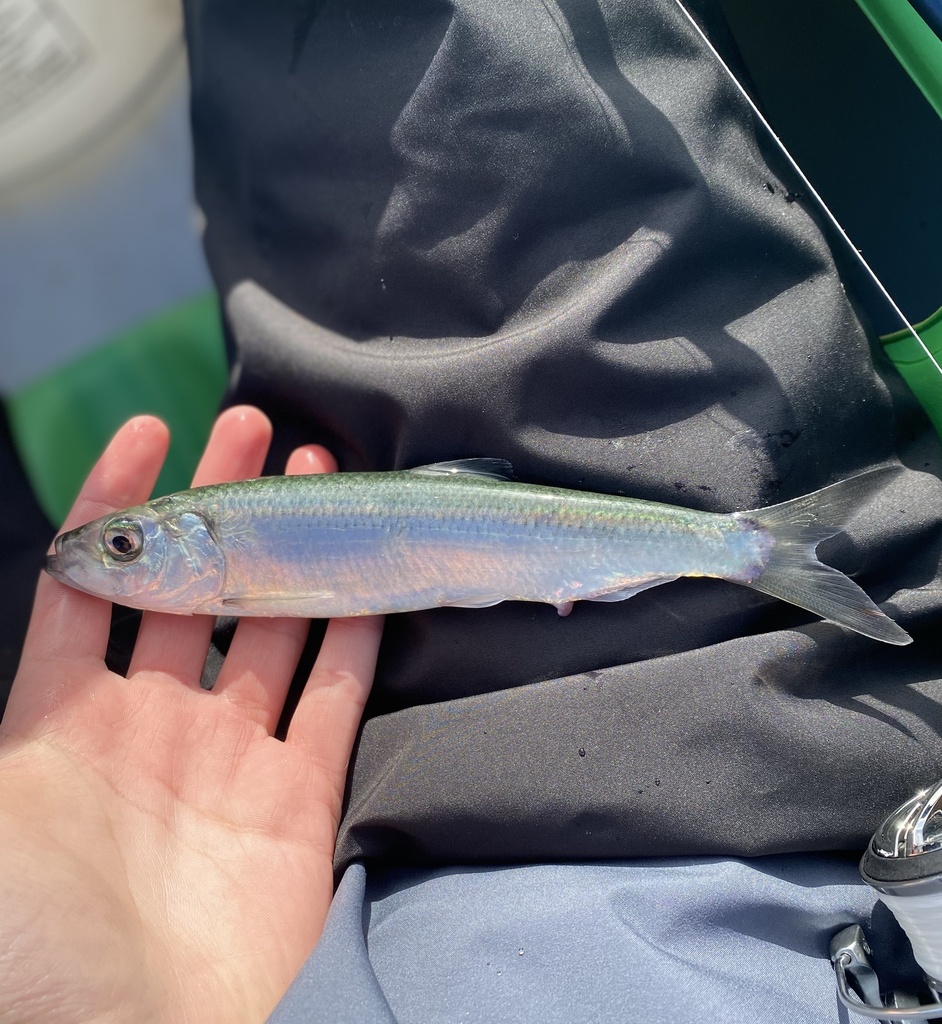
Pacific Herring
Clupea pallasii
Also known as: North Pacific Herring, Oriental Herring
About This Species
This small, silvery forage fish schools in vast numbers in coastal and nearshore waters of the North Pacific, moving inshore to spawn on shallow beds of eelgrass, kelp, and rock in late winter and spring. Spawning events turn the water milky white and draw dense feeding aggregations of seabirds, seals, and whales, making shoreline watching during these runs the most reliable way to witness the species in numbers. Look for surface disturbance, diving birds, and turbid, milt-clouded water along sheltered bays and inlets.
Ethical Viewing Guidelines
- Viewing is normally done from shore or boat and does not involve close approach to individual fish, so the main consideration is not disturbing the spawning aggregation or the predators it attracts.
- Stay well back from spawning shallows to avoid trampling eggs or pushing fish and feeding wildlife away, and follow any local shellfish or beach-closure notices tied to spawning events.
- Because this species carries a Data Deficient IUCN assessment, treat any local harvest or disturbance rules as the operative guidance rather than assuming the population is secure.
DDClupeiformesClupeidae
Seasonal Activity
484,979 sightings · 2000–2026
Citizen science records via GBIF
All monthsThis month
Classification
- Kingdom
- Animalia
- Phylum
- Chordata
- Order
- Clupeiformes
- Family
- Clupeidae
Photo
(c) coltonfishing, some rights reserved (CC BY-NC)
CC-BY-NC-4.0
Occurrence data from GBIF.