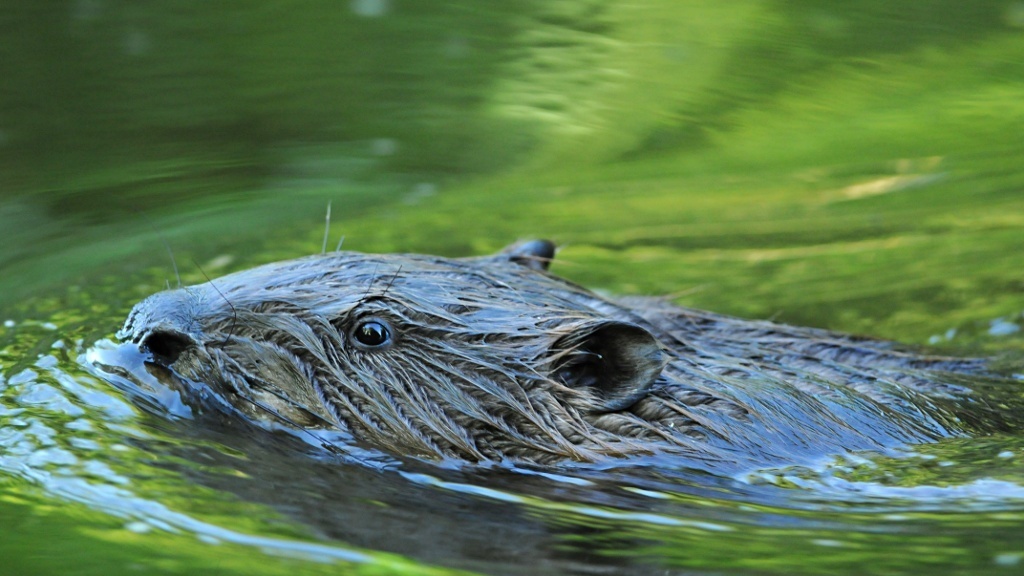
Eurasian Beaver
Castor fiber
Also known as: European Beaver, Beaver, Eurasian
Habitat
Ground
Diet
PlantSeed
Active Time
Nocturnal
Size
19.0 kg
About This Species
Europe's largest rodent builds dams, lodges and burrows along slow rivers, lakes and wetlands, and is best looked for at dusk or dawn when it is most active. Look for gnawed tree stumps, felled branches and dam structures as signs of its presence, and watch quietly by the water's edge for a wake trail or a slap of the tail on the surface. Autumn and winter, when vegetation is thinner, often give clearer sightings.
Ethical Viewing Guidelines
- Watch quietly from the bank at least several metres back and avoid using bright lights or sudden movement, since a startled beaver will slap its tail and dive, ending the sighting for that evening.
- This species is protected across much of its European range following reintroduction programmes, though the legal status of culling or dam removal varies by country, so check local rules before intervening at a site.
- Staying downwind and still gives the best chance of an extended, undisturbed view.
LCMammaliaRodentiaCastoridae
Seasonal Activity
350,047 sightings · 2000–2026
Citizen science records via GBIF
All monthsThis month
Classification
- Kingdom
- Animalia
- Phylum
- Chordata
- Class
- Mammalia
- Order
- Rodentia
- Family
- Castoridae
Traits
- Diet
- PlantSeed
- Foraging
- Ground
- Activity
- Nocturnal
- Body mass
- 19.0 kg
Photo
(c) Rudo Jureček, some rights reserved (CC BY-NC-SA)
CC-BY-NC-SA-4.0
Occurrence data from GBIF.