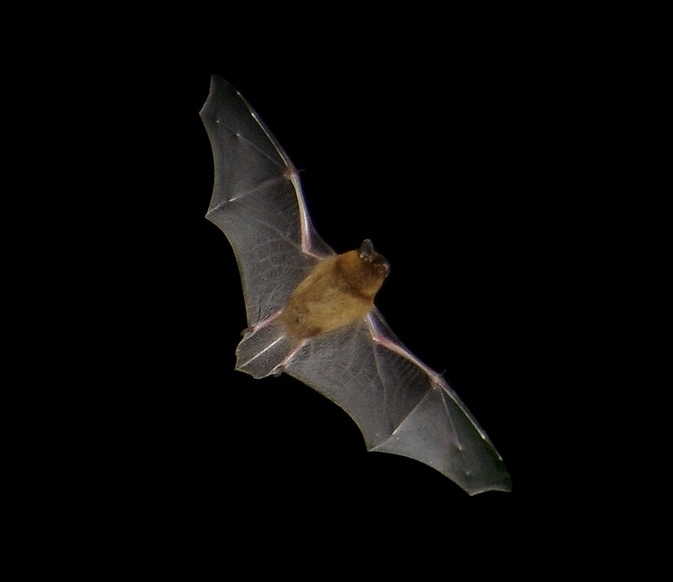
Common Pipistrelle
Pipistrellus pipistrellus
Also known as: Small House Bat, 45 Khz Pipistrelle, Bandit Pipistrelle, Common Pipistrelle Bat
Habitat
Aerial
Diet
Invertebrate
Active Time
Nocturnal
Size
6 g
About This Species
One of the smallest and most widespread bats in Europe, it emerges at dusk to hunt small flying insects over hedgerows, woodland edges and garden ponds with fast, erratic flight. It is best detected with a bat detector tuned to its echolocation calls, since its flight is often too quick and low-light to follow easily by eye alone. Warm summer evenings near water or sheltered vegetation offer the best chance of watching it forage.
Ethical Viewing Guidelines
- Avoid disturbing roosts in buildings, trees or bat boxes, especially during the summer maternity season or winter hibernation, when even brief disturbance can cause colony abandonment or fatal energy loss.
- Bats and their roosts are strictly protected by law across much of Europe, including the UK, where it is an offence to disturb, damage or destroy a roost even unknowingly.
- If a roost is suspected in a building, a licensed bat surveyor should be consulted before any work is carried out nearby.
Seasonal Activity
2,969,539 sightings · 2000–2026
Citizen science records via GBIF
Classification
- Kingdom
- Animalia
- Phylum
- Chordata
- Class
- Mammalia
- Order
- Chiroptera
- Family
- Vespertilionidae
Traits
- Diet
- Invertebrate
- Foraging
- Aerial
- Activity
- Nocturnal
- Body mass
- 6 g
Photo
(c) Barracuda1983, some rights reserved (CC BY-SA)
CC-BY-SA-4.0
Occurrence data from GBIF.