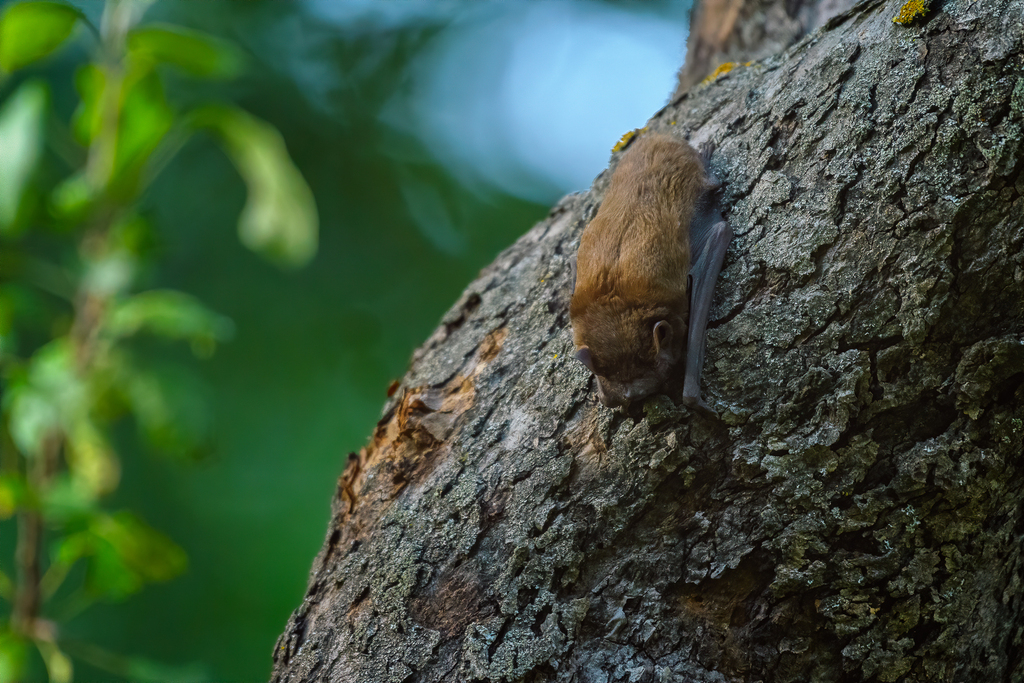
Lesser Noctule
Nyctalus leisleri
Also known as: Leisler's Bat, Leisler's Noctule, Lesser Noctule Bat
Habitat
Aerial
Diet
Invertebrate
Active Time
Nocturnal
Size
13 g
About This Species
This fast-flying bat emerges early in the evening, often well before full dark, and hunts high above woodland canopy and clearings for moths and beetles. Listen for a heterodyne detector picking up its low, slow echolocation clicks, distinct from the faster calls of smaller pipistrelles. Tree-hole and bat-box roosts in mature broadleaf or mixed woodland are the best places to look, especially in warm summer evenings when insect activity peaks.
Ethical Viewing Guidelines
- Watch and listen from the ground rather than approaching roost trees or bat boxes, since disturbance during roosting or hibernation can cause bats to abandon a site or waste critical energy reserves.
- Bats and their roosts have legal protection across much of their European range, though the exact rules and permitted activities differ by country, so treat any known roost as off-limits without local guidance or a licence.
- Avoid shining bright lights or torches directly at foraging or roosting animals.
Seasonal Activity
291,102 sightings · 2000–2026
Citizen science records via GBIF
Classification
- Kingdom
- Animalia
- Phylum
- Chordata
- Class
- Mammalia
- Order
- Chiroptera
- Family
- Vespertilionidae
Traits
- Diet
- Invertebrate
- Foraging
- Aerial
- Activity
- Nocturnal
- Body mass
- 13 g
Photo
(c) Gabi Rusu, some rights reserved (CC BY-NC), uploaded by Gabi Rusu
CC-BY-NC-4.0
Occurrence data from GBIF.