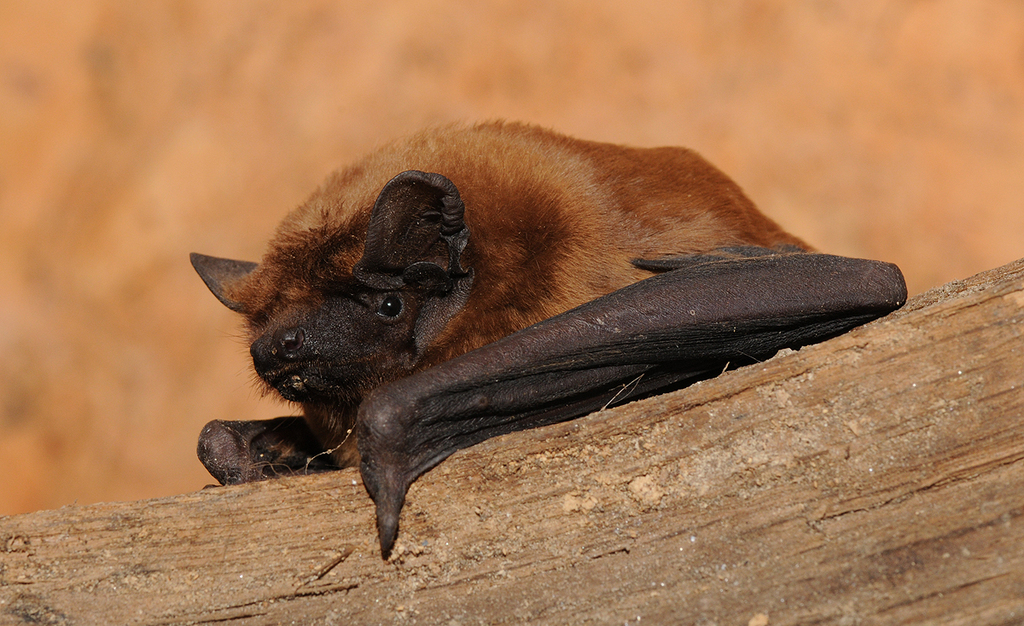
Noctule
Nyctalus noctula
Also known as: Common Noctule, Noctule Bat, Grof 3 Er Abendsegler
Habitat
Aerial
Diet
Invertebrate
Active Time
Nocturnal
Size
28 g
About This Species
One of Europe's largest bats, it forages high above treetops and open water at dusk, flying fast and direct in a manner distinct from the fluttering of smaller species, and its calls are often audible to the human ear as sharp chirps rather than requiring a bat detector. Look for it around woodland edges, parks, and waterways from spring through early autumn, particularly on warm evenings just after sunset when insect activity peaks. It roosts in tree hollows and occasionally buildings, emerging noticeably earlier than most other bat species.
Ethical Viewing Guidelines
- Observe from the ground without approaching roost trees or entering roost cavities, since bats are highly sensitive to disturbance and many countries afford them strict legal protection.
- Across much of Europe, including the UK, bats and their roosts are protected by law, making it an offence to disturb, handle, or damage a roost without a licence, and similar protections exist in other range states, so always check local rules before any close approach.
- If a bat is found grounded or injured, contact a licensed wildlife rehabilitator rather than handling it directly, as direct contact carries rabies-related health risks in some regions.
Seasonal Activity
255,584 sightings · 2000–2026
Citizen science records via GBIF
Classification
- Kingdom
- Animalia
- Phylum
- Chordata
- Class
- Mammalia
- Order
- Chiroptera
- Family
- Vespertilionidae
Traits
- Diet
- Invertebrate
- Foraging
- Aerial
- Activity
- Nocturnal
- Body mass
- 28 g
Photo
(c) Jan Svetlik, some rights reserved (CC BY-NC-SA)
CC-BY-NC-SA-4.0
Occurrence data from GBIF.