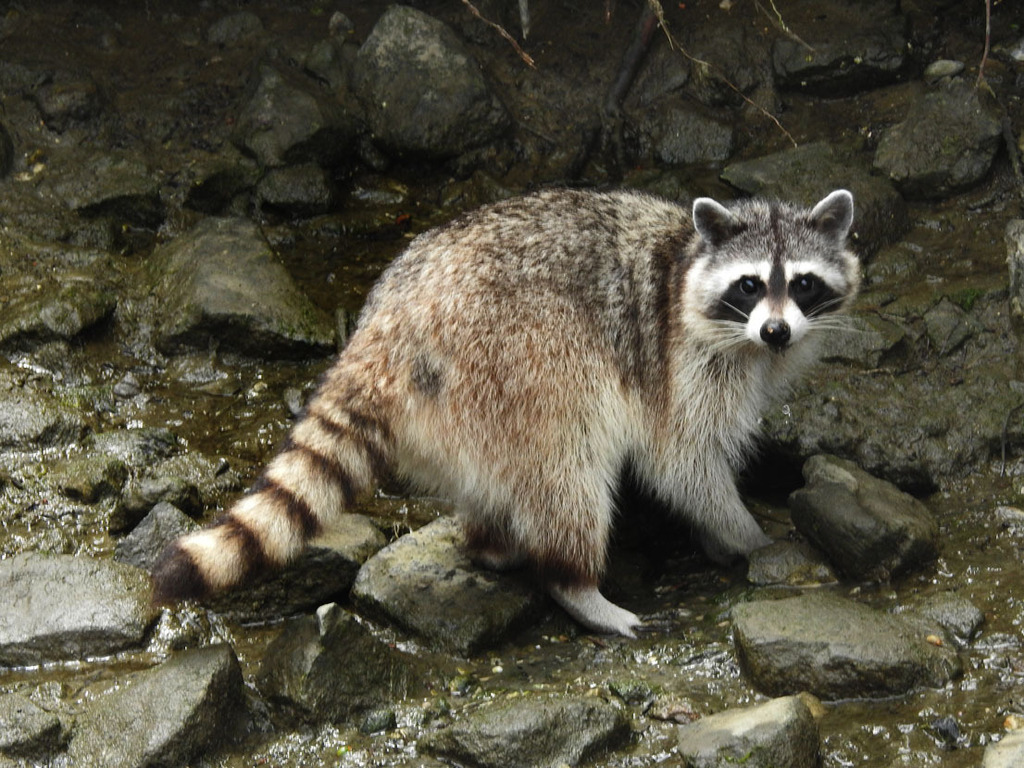
Raccoon
Procyon lotor
Also known as: Common Raccoon, Northern Raccoon, Mapache, Raton Laveur
Habitat
Ground
Diet
Invertebrate
Active Time
Nocturnal
Size
5.5 kg
About This Species
A mainly nocturnal forager that works the ground for almost anything edible, from stream edges and woodland to parks and residential areas across its native North American range and the parts of Europe and Asia where it has been introduced. Dusk and after dark are the best times to look, often near water or bins in urban areas where individuals have grown bold around people. The ringed tail and black facial mask make it unmistakable even in poor light.
Ethical Viewing Guidelines
- Keep a solid distance, especially from a female that may have young nearby or any individual behaving erratically, since raccoons can carry rabies in parts of their range and bites are a genuine risk.
- Never feed them: doing so encourages dangerous close contact and habituation that tends to end badly for the animal.
- In areas where it is an introduced species, some regions also regulate or prohibit feeding and relocation, so check local rules before intervening in any way.
Seasonal Activity
168,760 sightings · 2000–2026
Citizen science records via GBIF
Classification
- Kingdom
- Animalia
- Phylum
- Chordata
- Class
- Mammalia
- Order
- Carnivora
- Family
- Procyonidae
Traits
- Diet
- Invertebrate
- Foraging
- Ground
- Activity
- Nocturnal
- Body mass
- 5.5 kg
Photo
(c) Kat Halsey, some rights reserved (CC BY-NC), uploaded by Kat Halsey
CC-BY-NC-4.0
Occurrence data from GBIF.