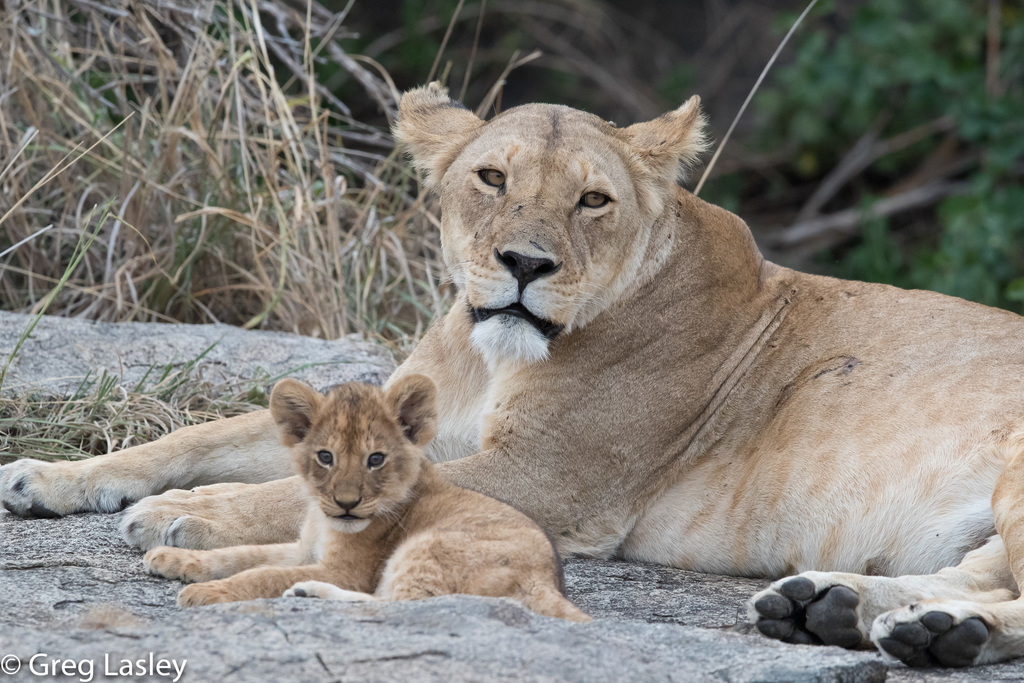
Lion
Panthera leo
Also known as: African Lion
Habitat
Ground
Diet
VertFishScav
Active Time
Nocturnal
Size
161.5 kg
About This Species
Found across open savanna, dry woodland, and semi-arid grassland, these social carnivores spend the majority of daylight hours resting in shade — scan acacia thickets, kopjes, and dry riverbeds where prides can be spotted sprawled in groups of up to twenty animals. At dusk and dawn listen for deep, resonant roaring that can carry five kilometres or more, a reliable acoustic cue that a pride is active and often on the move. The best sightings come during the dry season, when thinning vegetation opens sight lines and prey concentrations around permanent waterholes draw prides into predictable locations in the early morning and late afternoon light.
Ethical Viewing Guidelines
- Maintain a minimum distance of 50 metres at all times, and never approach individuals resting, feeding, or accompanied by cubs, as disturbance during these periods carries elevated risk of stress and behavioural disruption.
- Across their range, they are protected under national wildlife legislation in most range states — including Kenya's Wildlife Conservation and Management Act, South Africa's National Environmental Management: Biodiversity Act, and CITES Appendix II restrictions on trade — so always engage only through licensed operators and permitted parks or reserves.
- Keep vehicles stationary with engines at low idle, limit group sizes, avoid surrounding individuals or prides, and never exceed 30 minutes of continuous observation to reduce cumulative pressure on this vulnerable species.
Seasonal Activity
14,391 sightings · 2000–2026
Citizen science records via GBIF
Classification
- Kingdom
- Animalia
- Phylum
- Chordata
- Class
- Mammalia
- Order
- Carnivora
- Family
- Felidae
Traits
- Diet
- VertFishScav
- Foraging
- Ground
- Activity
- Nocturnal
- Body mass
- 161.5 kg
Photo
(c) Greg Lasley, some rights reserved (CC BY-NC), uploaded by Greg Lasley
CC-BY-NC-4.0
Occurrence data from GBIF.