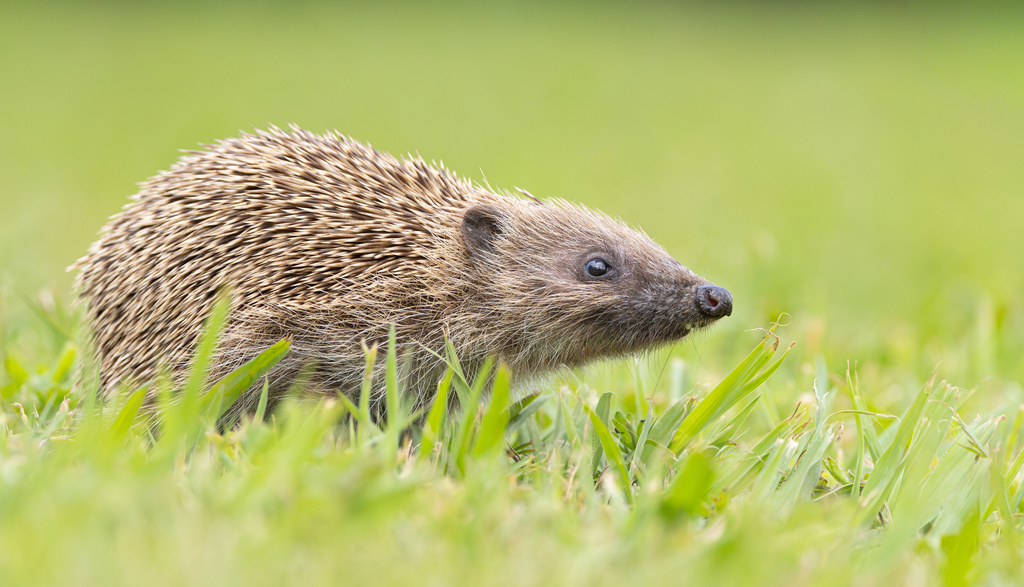
West European Hedgehog
Erinaceus europaeus
Also known as: Western European Hedgehog, Hedgehog, Northern Hedgehog, Western Hedgehog, Brown-Breasted Hedgehog
Habitat
Ground
Diet
Invertebrate
Active Time
Nocturnal
Size
771 g
About This Species
Look for low rustling in leaf litter, hedgerows and compost heaps after dusk, especially on warm, damp nights from late spring through early autumn when invertebrate prey is abundant. Gardens with log piles, uncut corners and small gaps in fences or walls for cross-garden movement are the most reliable places to spot one foraging. Torchlight held low and still, rather than direct beam-on-face, is less likely to send it curling into a ball.
Ethical Viewing Guidelines
- Stay a few metres back and let it continue foraging rather than blocking its path; this species is protected under wildlife legislation in parts of its European range, and disturbing a nest or hibernation site can be an offence.
- Because it is assessed as Near Threatened, avoid handling healthy animals, keep dogs leashed nearby, and never feed bread or milk, which can cause harm.
- If one appears active and unbothered in daylight, that can indicate illness, so observe from a distance and contact a local wildlife rescue rather than intervening yourself.
Seasonal Activity
795,853 sightings · 2000–2026
Citizen science records via GBIF
Classification
- Kingdom
- Animalia
- Phylum
- Chordata
- Class
- Mammalia
- Order
- Erinaceomorpha
- Family
- Erinaceidae
Traits
- Diet
- Invertebrate
- Foraging
- Ground
- Activity
- Nocturnal
- Body mass
- 771 g
- Home range
- 8 ha
Photo
(c) Caiden B, some rights reserved (CC BY-NC), uploaded by Caiden B
CC-BY-NC-4.0
Occurrence data from GBIF.