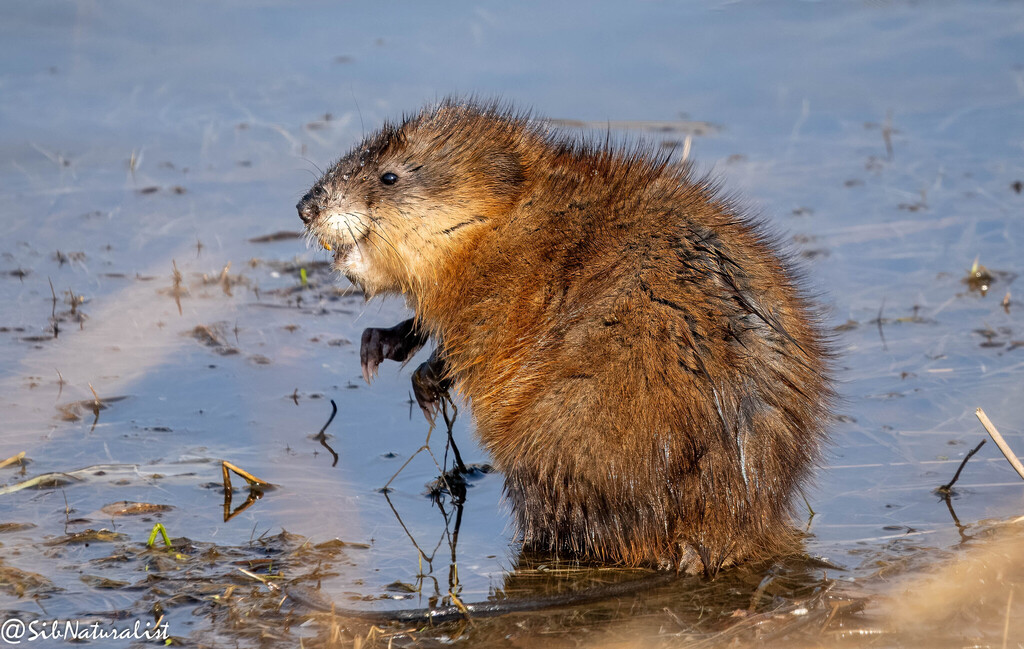
Muskrat
Ondatra zibethicus
Also known as: Common Muskrat, Muskbeaver, Musk Rat, Bisamratte, Rata Almizclera
Habitat
Ground
Diet
PlantSeed
Active Time
Nocturnal
Size
1.1 kg
About This Species
This large semi-aquatic rodent builds dome-shaped lodges or bank burrows in marshes, ponds and slow-moving waterways, and is most easily seen swimming at dusk or dawn with just its head above the water. Look for feeding platforms of piled vegetation and the distinctive V-shaped wake it leaves while swimming, especially in warmer months when activity peaks. Quiet observation from a shoreline or boardwalk near dusk gives the best chance of a sighting.
Ethical Viewing Guidelines
- Keep a distance of at least 10 to 15 metres and avoid approaching a lodge or burrow entrance, since a cornered muskrat can bite if it feels threatened.
- Trapping and hunting regulations for this species vary significantly by country and even by state or province, so anyone considering closer interaction should check local wildlife regulations rather than assume a blanket rule.
- Passive viewing from the water's edge at dawn or dusk is both safer and more rewarding than trying to approach an active animal.
Seasonal Activity
1,150,558 sightings · 2000–2026
Citizen science records via GBIF
Classification
- Kingdom
- Animalia
- Phylum
- Chordata
- Class
- Mammalia
- Order
- Rodentia
- Family
- Cricetidae
Traits
- Diet
- PlantSeed
- Foraging
- Ground
- Activity
- Nocturnal
- Body mass
- 1.1 kg
Photo
(c) Leonid, some rights reserved (CC BY-NC), uploaded by Leonid
CC-BY-NC-4.0
Occurrence data from GBIF.