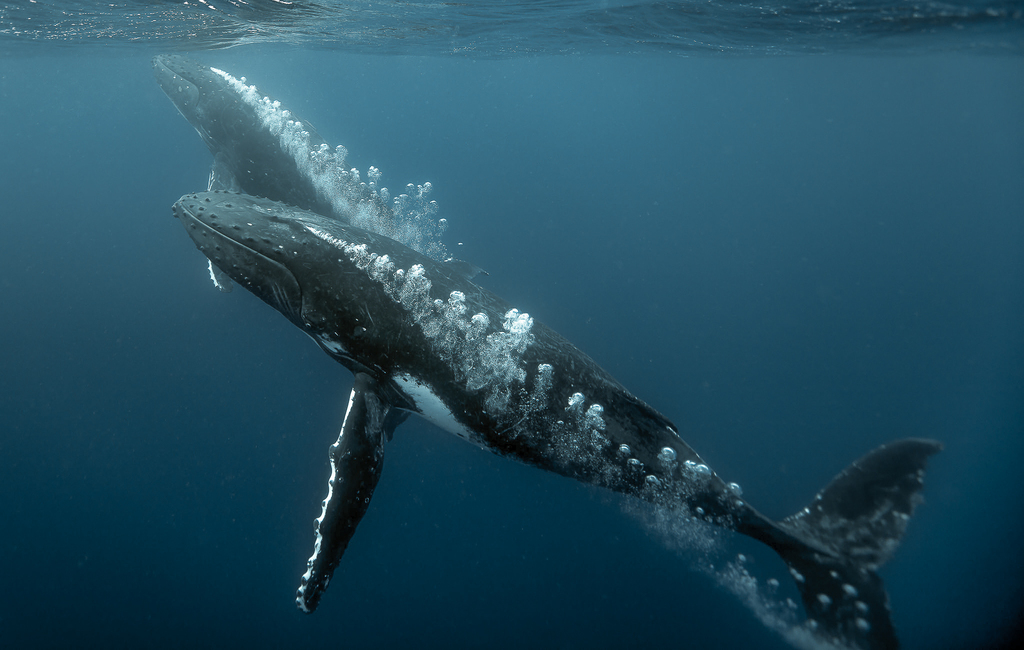
Humpback Whale
Megaptera novaeangliae
Also known as: Bunch Whale, Hunchback Whale, Hump, Hump Whale, Hunch
Habitat
Aquatic
Diet
Invertebrate
Active Time
Diurnal
Size
30000.0 kg
About This Species
Watch for blows, tail flukes raised before a deep dive, and occasional breaching in coastal and offshore waters, especially near feeding grounds rich in krill and small schooling fish. Sightings peak during seasonal migration and feeding periods, which vary by region but often cluster in summer months at higher-latitude feeding areas and winter months near tropical breeding grounds. Boat-based trips run by reputable operators, or headland watches during migration, are the most practical ways to encounter this species.
Ethical Viewing Guidelines
- Maintain at least 100 metres of separation from any whale and never approach a mother with a calf, cutting engines to idle or neutral if one surfaces nearby unexpectedly.
- Approach distances and vessel speed limits around Humpback Whales are set by national marine mammal protection laws that differ significantly between countries, so confirm the specific regulations for the waters you are in before setting out.
- Never pursue, encircle, or attempt to swim with the animals, and disengage promptly if a whale shows signs of altered behaviour such as repeated tail-slapping or sudden diving away.
Seasonal Activity
467,775 sightings · 2000–2026
Citizen science records via GBIF
Classification
- Kingdom
- Animalia
- Phylum
- Chordata
- Class
- Mammalia
- Order
- Cetacea
- Family
- Balaenopteridae
Traits
- Diet
- Invertebrate
- Foraging
- Aquatic
- Activity
- Diurnal
- Body mass
- 30000.0 kg
Photo
(c) Wayne and Pam Osborn, some rights reserved (CC BY-NC), uploaded by Wayne and Pam Osborn
CC-BY-NC-4.0
Occurrence data from GBIF.