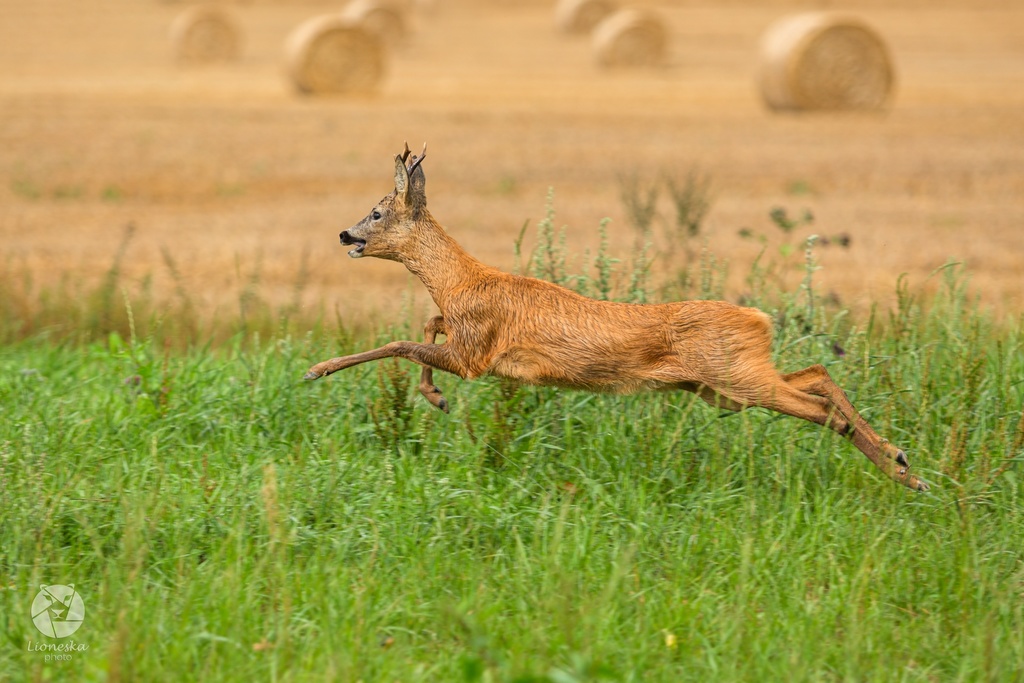
European Roe
Capreolus capreolus
Also known as: Roe Deer, Western Roe Deer, European Roe Deer, Corzo
Habitat
Ground
Diet
PlantSeed
Active Time
Diurnal
Size
22.5 kg
About This Species
Most active at dawn and dusk despite being predominantly nocturnal, this small deer favours woodland edges, hedgerows, and field margins where cover meets open grazing ground. Watch for the distinctive white rump patch bobbing as it moves through low vegetation, and listen for the sharp, dog-like bark given as an alarm call. Late May through July offers the best viewing, when bucks are actively defending territories and does with spotted fawns venture into open fields in the early morning light.
Ethical Viewing Guidelines
- Maintain a minimum distance of 50–100 metres, using binoculars or a telephoto lens to observe without approaching, and never pursue or attempt to attract individuals with calls or food.
- Across their range, they are protected under national wildlife legislation in most European countries — including the UK Wildlife and Countryside Act 1981, Germany's Bundesnaturschutzgesetz, and equivalent statutes elsewhere — which prohibit intentional disturbance, harassment, and unlicensed capture.
- During the rutting season (July–August) and the fawning period (May–June), exercise particular restraint, as does and fawns are especially sensitive to disturbance, and human scent near a fawn can cause the mother to abandon it.
Seasonal Activity
2,066,541 sightings · 2000–2026
Citizen science records via GBIF
Classification
- Kingdom
- Animalia
- Phylum
- Chordata
- Class
- Mammalia
- Order
- Artiodactyla
- Family
- Cervidae
Traits
- Diet
- PlantSeed
- Foraging
- Ground
- Activity
- Diurnal
- Body mass
- 22.5 kg
- Home range
- 52 ha
Photo
(c) Lioneska, some rights reserved (CC BY-NC), uploaded by Lioneska
CC-BY-NC-4.0
Occurrence data from GBIF.