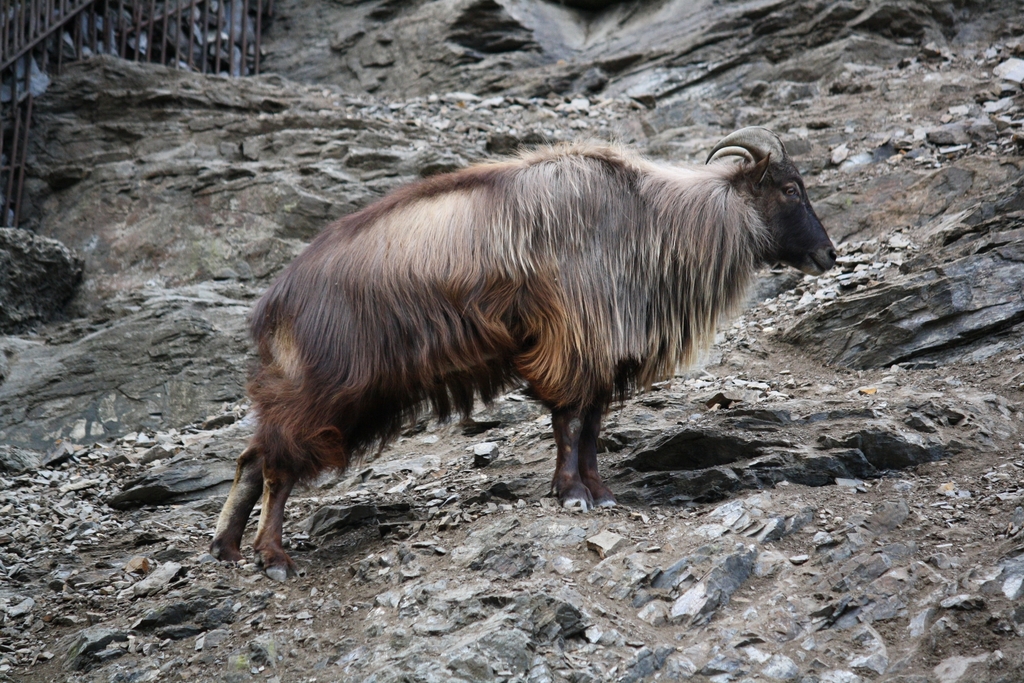
Himalayan Tahr
Hemitragus jemlahicus
Habitat
Ground
Diet
PlantSeed
Active Time
Nocturnal
Size
35.2 kg
About This Species
Found in steep, rocky terrain between 2,500 and 5,000 metres, these sure-footed ungulates graze on grasses, shrubs, and herbaceous plants along cliff faces and alpine meadows, often forming small herds led by older females. Scan exposed rocky outcrops and south-facing slopes for their distinctive reddish-brown coats and the males' thick, shaggy neck manes; listen for the clatter of dislodged scree as they move across loose rock, which often betrays their presence before you spot them. Although primarily active around dusk and dawn given their nocturnal tendencies, the best viewing opportunities come in the dry winter months from November through February, when reduced vegetation and lower snowlines push animals onto more accessible terrain — use binoculars along ridge lines in the early morning light before they retreat to shaded ledges.
Ethical Viewing Guidelines
- Maintain a minimum distance of 50 metres, using binoculars or a telephoto lens to observe without pressuring animals to move — if individuals begin to alert, stamp, or retreat, you are too close and should withdraw slowly.
- Within their native Himalayan range spanning India, Nepal, and China, they receive protection under India's Wildlife Protection Act (1972), Nepal's National Parks and Wildlife Conservation Act (1973), and relevant provincial regulations in China, making deliberate disturbance or harassment a legal offence.
- Approach from downwind, avoid sudden movements or loud noise, never position yourself between animals and their escape routes, and keep group sizes small to reduce cumulative stress on herds.
Seasonal Activity
356 sightings · 2002–2026
Citizen science records via GBIF
Classification
- Kingdom
- Animalia
- Phylum
- Chordata
- Class
- Mammalia
- Order
- Artiodactyla
- Family
- Bovidae
Traits
- Diet
- PlantSeed
- Foraging
- Ground
- Activity
- Nocturnal
- Body mass
- 35.2 kg
Photo
(c) Matěj Baťha, some rights reserved (CC BY-SA)
CC-BY-SA-4.0
Occurrence data from GBIF.