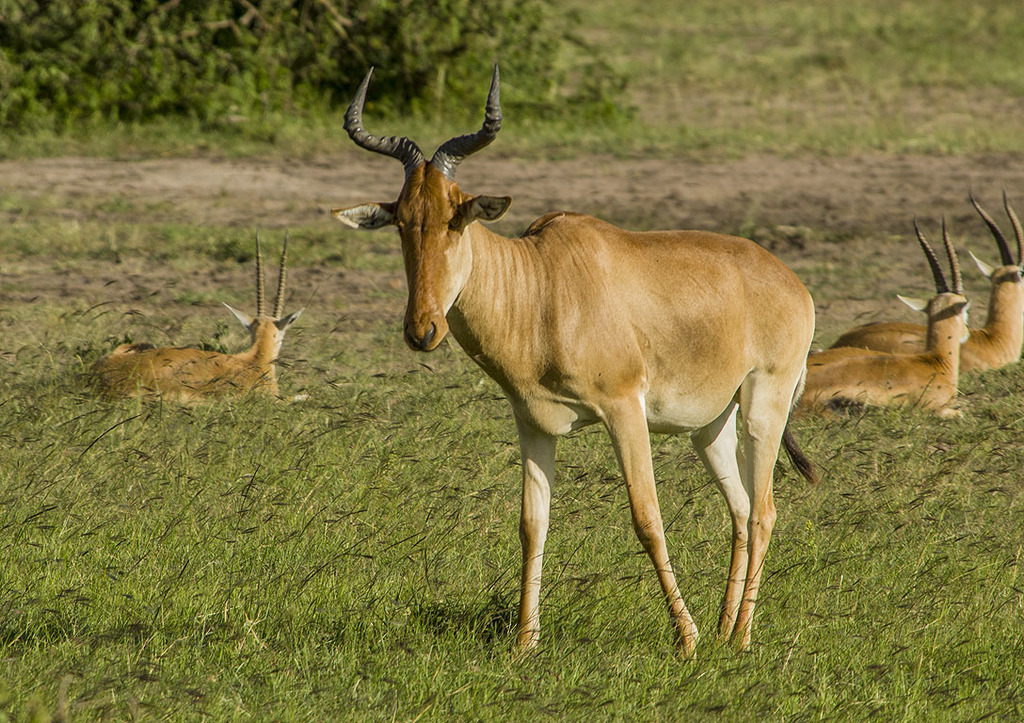
Hartebeest
Alcelaphus buselaphus
Also known as: Bubal Hartebeest
Habitat
Ground
Diet
PlantSeed
Active Time
Diurnal
Size
171.0 kg
About This Species
These large, ungainly-looking antelope favour open grasslands, wooded savannas, and floodplain margins, where they graze selectively on coarser grasses and gather in loose herds that often include a sentinel standing atop a termite mound or elevated ground, scanning for predators. Look for the distinctive long, narrow face, steeply sloping back, and bracket-shaped horns present on both sexes, and listen for the sharp snort-and-stamp alarm display that typically precedes a herd's erratic, stiff-legged flight. The best observations come during the cooler, dry-season mornings when herds are most active, feeding in the open before midday heat drives them to seek shade — golden-hour light also makes it easier to distinguish herd structure and spot territorial bulls standing apart from the main group.
Ethical Viewing Guidelines
- Maintain a minimum distance of 50–100 metres, using binoculars or a telephoto lens to observe natural behaviours without causing the animals to flee or abandon calves.
- Across their range, they are protected under national wildlife legislation in countries such as Kenya, Tanzania, and South Africa, as well as broader frameworks including CITES and the African Convention on the Conservation of Nature and Natural Resources, so always ensure you hold valid permits and observe from designated areas where applicable.
- Avoid approaching during calving season, remain downwind to prevent scent disturbance, keep noise and vehicle movement to a minimum, and never position yourself between a female and her young.
Seasonal Activity
3,755 sightings · 2000–2026
Citizen science records via GBIF
Classification
- Kingdom
- Animalia
- Phylum
- Chordata
- Class
- Mammalia
- Order
- Artiodactyla
- Family
- Bovidae
Traits
- Diet
- PlantSeed
- Foraging
- Ground
- Activity
- Diurnal
- Body mass
- 171.0 kg
Photo
(c) Ad Konings, some rights reserved (CC BY-NC), uploaded by Ad Konings
CC-BY-NC-4.0
Occurrence data from GBIF.