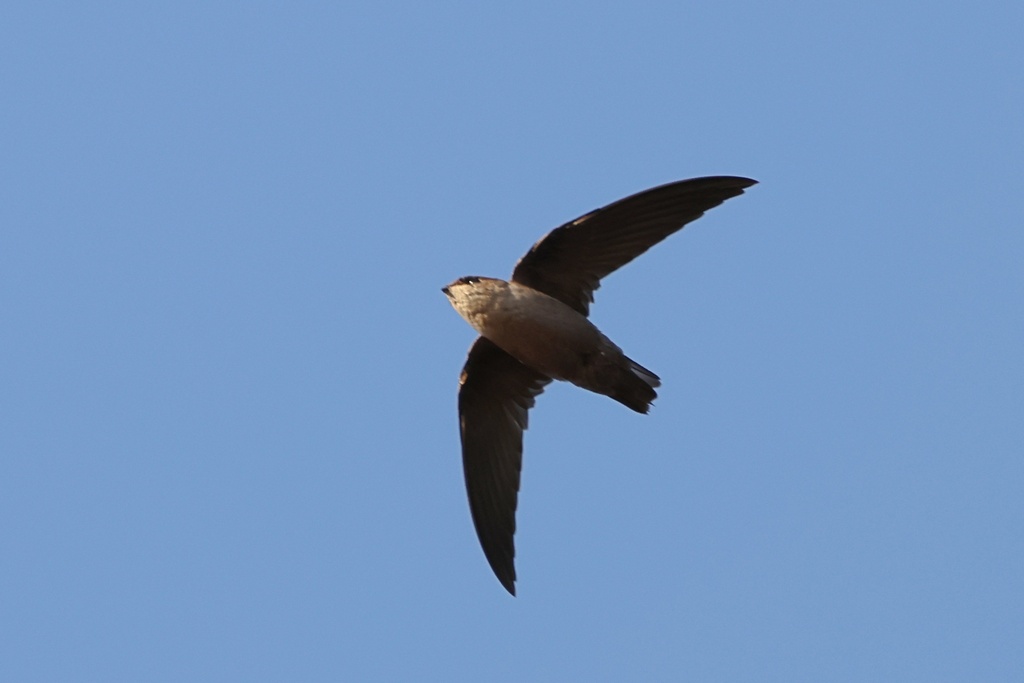
Vaux's Swift
Chaetura vauxi
About This Species
This small, fast-flying swift forages high over forests, rivers, and towns from western North America down into South America, and it nests and roosts communally inside large hollow trees or, increasingly, disused chimneys. The signature spectacle is a dusk roost entry, when dozens to thousands of swifts circle in a tightening funnel before pouring into the roost cavity, a display best seen from open ground near a known roost site in the half hour before sunset. Spring and autumn migration periods often bring the largest concentrations as birds stage at traditional roosts.
Ethical Viewing Guidelines
- Watching a roost entry from open ground well away from the chimney or tree, rather than directly beneath it, lets the birds funnel in undisturbed and avoids any risk from falling debris.
- Legal protection for this migratory species varies across the many countries it passes through on migration, and in some places nest and roost sites in structures are specifically safeguarded, so any building known to host a roost should not be disturbed, capped, or renovated during the swifts' season without checking local rules first.
- Simply observing quietly from a distance is both the safest and most rewarding way to watch this species.
Seasonal Activity
406,901 sightings · 2000–2026
Citizen science records via GBIF
Classification
- Kingdom
- Animalia
- Phylum
- Chordata
- Class
- Aves
- Order
- Apodiformes
- Family
- Apodidae
Photo
(c) Caleb Villar, some rights reserved (CC BY-NC), uploaded by Caleb Villar
CC-BY-NC-4.0
Occurrence data from GBIF.