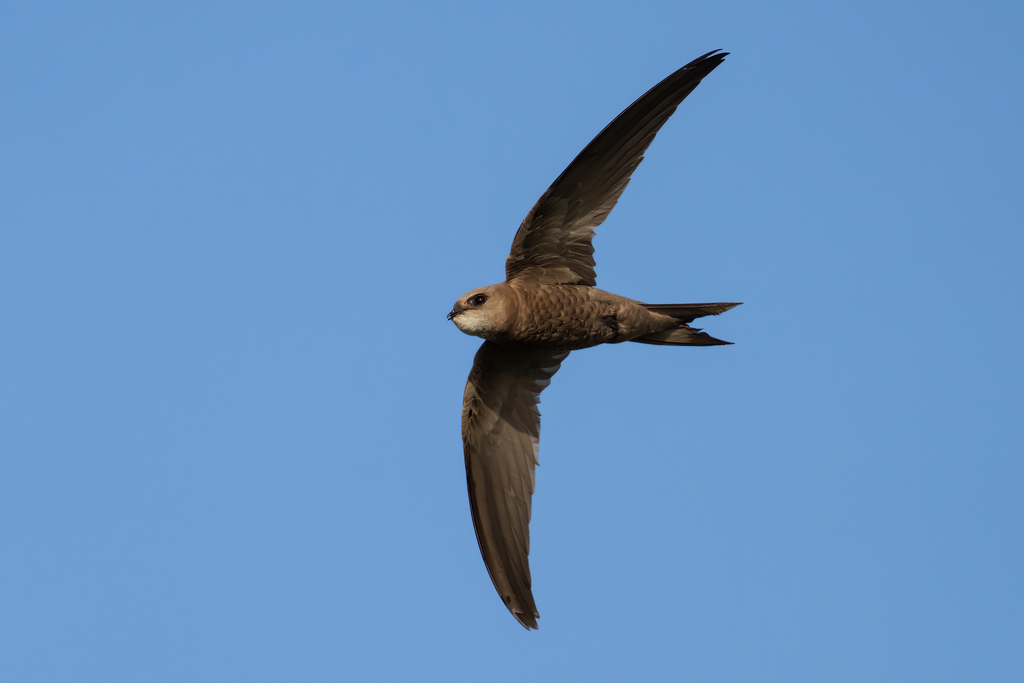
Pallid Swift
Apus pallidus
Habitat
Aerial
Diet
Invertebrate
Active Time
Diurnal
Size
42 g
About This Species
Closely resembling the common swift, this bird spends almost its entire life aloft over towns, cliffs, and coastal areas around the Mediterranean and parts of Africa, feeding on flying insects high above ground and only landing to nest in crevices on cliffs or old buildings. Look for fast, scything flocks wheeling around towers, bridges, and sea cliffs at dusk, when insect activity peaks, and listen for its slightly lower, harsher screaming call compared to the common swift. Warmer months during the breeding season bring the largest, most active colonies.
Ethical Viewing Guidelines
- Nesting crevices in buildings and cliffs are best watched from ground level without attempting to reach or inspect the nest site directly, since access disturbs a colony that returns to the same crevices year after year.
- It is protected under wild bird legislation across its European and North African range, including EU rules protecting nest sites even when unoccupied outside the breeding season, though specific rules on building renovation near colonies vary by country.
- Anyone planning building work where these birds are known to nest should check local requirements first, since removing access to nest sites can be restricted by law.
Seasonal Activity
204,097 sightings · 2000–2026
Citizen science records via GBIF
Classification
- Kingdom
- Animalia
- Phylum
- Chordata
- Class
- Aves
- Order
- Apodiformes
- Family
- Apodidae
Traits
- Diet
- Invertebrate
- Foraging
- Aerial
- Activity
- Diurnal
- Body mass
- 42 g
Photo
(c) cog2022, some rights reserved (CC BY-NC)
CC-BY-NC-4.0
Occurrence data from GBIF.