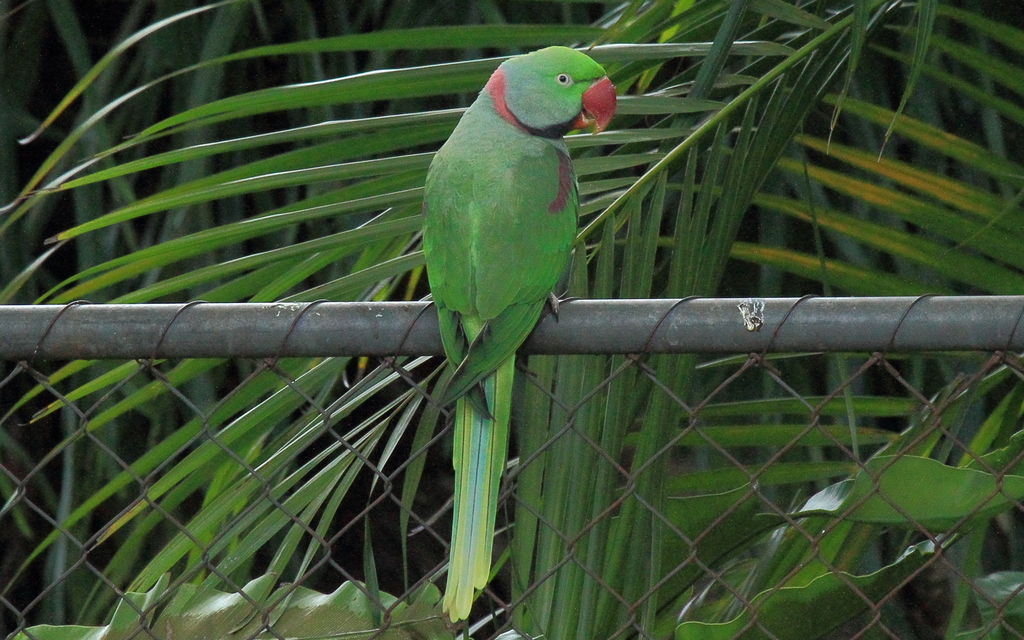
Alexandrine Parakeet
Psittacula eupatria
Habitat
Understory
Diet
FruiNect
Active Time
Diurnal
Size
214 g
About This Species
This large, long-tailed parakeet with a distinctive red shoulder patch favours open forest, forest edges and cultivated land across South and Southeast Asia, often seen in pairs or small flocks flying above the canopy with loud, ringing calls, or feeding on fruit, seeds and blossoms in fruiting trees. It is most active and vocal in the early morning and late afternoon. Look near large fruiting or flowering trees and old-growth stands that provide the nest hollows it depends on.
Ethical Viewing Guidelines
- As a Near Threatened species impacted significantly by capture for the cage-bird trade, keep well back from any bird you encounter and never approach, feed or attempt to photograph nest cavities, since disturbance at nests can cause abandonment.
- It is legally protected in most range countries and listed under CITES, restricting international trade, though enforcement and specific protections vary considerably between countries.
- Report any evidence of nest poaching or trapping to local authorities rather than intervening directly, and observe wild flocks only from a distance with binoculars.
NTAvesPsittaciformesPsittacidae
Seasonal Activity
195,792 sightings · 2000–2026
Citizen science records via GBIF
All monthsThis month
Classification
- Kingdom
- Animalia
- Phylum
- Chordata
- Class
- Aves
- Order
- Psittaciformes
- Family
- Psittacidae
Traits
- Diet
- FruiNect
- Foraging
- Understory
- Activity
- Diurnal
- Body mass
- 214 g
Photo
(c) Jeff Melvaine, some rights reserved (CC BY-NC), uploaded by Jeff Melvaine
CC-BY-NC-4.0
Occurrence data from GBIF.