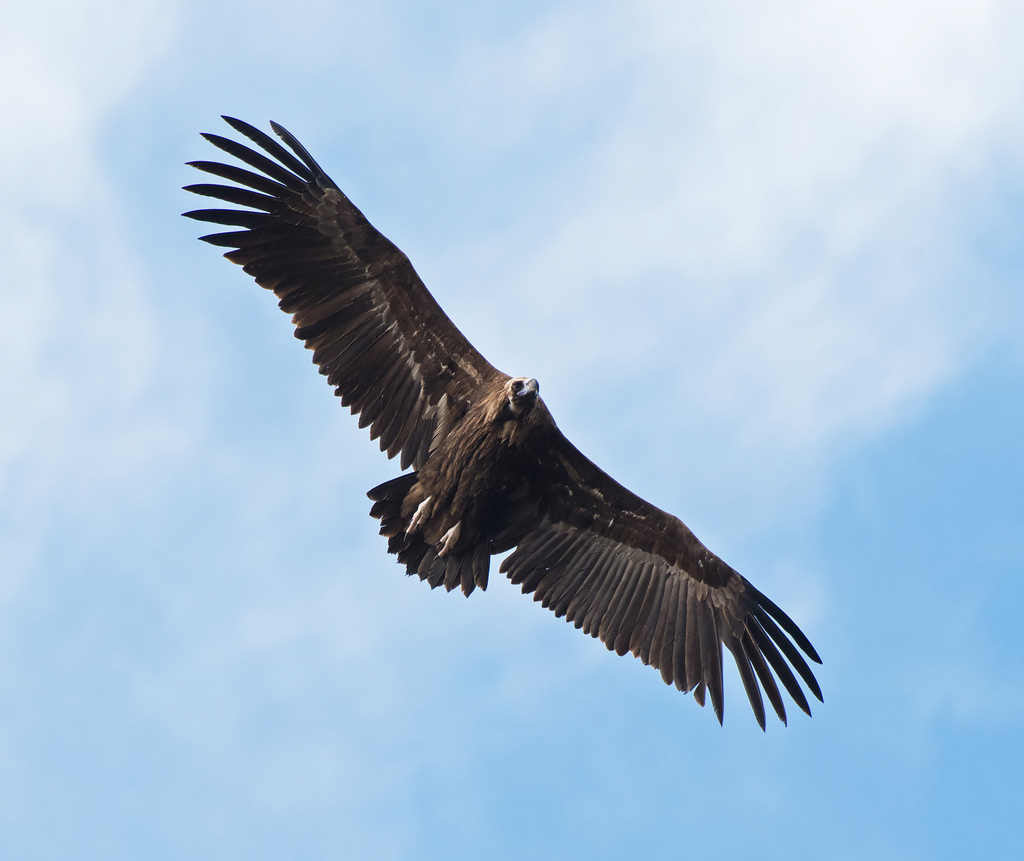
Cinereous Vulture
Aegypius monachus
Also known as: Eurasian Black Vulture, Monk Vulture, Cinereus Vulture
Habitat
Ground
Diet
VertFishScav
Active Time
Diurnal
Size
9.3 kg
About This Species
Soars for hours on broad wings over open mountains, steppe and gorges, searching for carrion, and nests and roosts on inaccessible cliff faces. Mid-morning onward, once thermals build, is the best time to scan ridgelines for large dark shapes circling; birds sometimes gather in numbers at a carcass. Breeding colonies in Iberia, the Balkans and parts of Central Asia offer the most reliable sightings.
Ethical Viewing Guidelines
- As a near-threatened species highly sensitive to disturbance at nest and roost sites, stay hundreds of metres back from any cliff with visible breeding activity and use binoculars or a scope rather than closing the distance.
- It receives legal protection across most of its range, including under the EU Birds Directive in Europe, but the specific rules and enforcement differ between countries, so check locally before visiting a known colony.
NTAvesAccipitriformesAccipitridae
Seasonal Activity
303,242 sightings · 2000–2026
Citizen science records via GBIF
All monthsThis month
Classification
- Kingdom
- Animalia
- Phylum
- Chordata
- Class
- Aves
- Order
- Accipitriformes
- Family
- Accipitridae
Traits
- Diet
- VertFishScav
- Foraging
- Ground
- Activity
- Diurnal
- Body mass
- 9.3 kg
Photo
(c) Геннадий, some rights reserved (CC BY-NC), uploaded by Геннадий
CC-BY-NC-4.0
Occurrence data from GBIF.