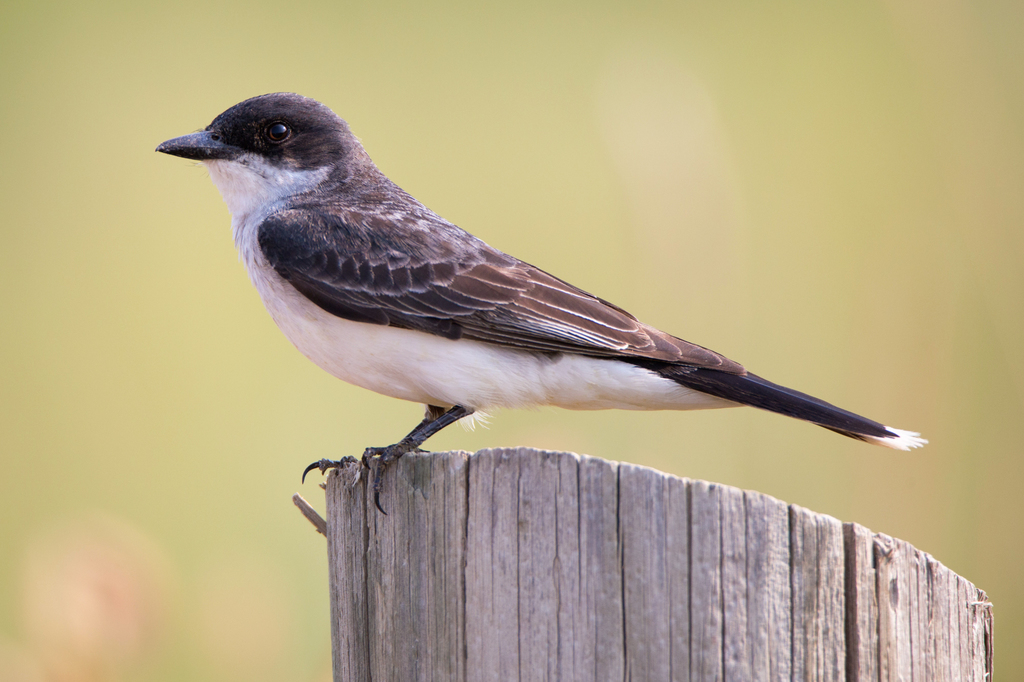
Eastern Kingbird
Tyrannus tyrannus
Also known as: Fork-Tailed Flycatcher
Habitat
Understory
Diet
Invertebrate
Active Time
Diurnal
Size
40 g
About This Species
Look for it perched conspicuously on fence wires, hedgerows, or exposed branches at the edge of open farmland, orchards, and riversides, from where it sallies out after flying insects and returns to the same spot. The blackish upperparts, white underside, and a thin white terminal tail band are diagnostic, and its harsh chattering calls often give it away before you see it. It is most visible through the breeding season, when pairs aggressively chase off crows, hawks, and other intruders near the nest, sometimes riding on the back of a larger bird mid-flight.
Ethical Viewing Guidelines
- Keep a respectful distance of at least 20-30 metres from an active nest or perch and watch with binoculars rather than closing in, since this species will mob and dive at anything it perceives as a threat, including people who linger too close.
- Across its North American breeding range, nests, eggs, and adults are protected under migratory bird protection laws, so disturbing an active nest is not just discourteous but can be unlawful.
- Retreat if birds begin giving alarm calls or diving repeatedly, as that is a sign you are too close for their comfort.
Seasonal Activity
3,933,108 sightings · 2000–2026
Citizen science records via GBIF
Classification
- Kingdom
- Animalia
- Phylum
- Chordata
- Class
- Aves
- Order
- Passeriformes
- Family
- Tyrannidae
Traits
- Diet
- Invertebrate
- Foraging
- Understory
- Activity
- Diurnal
- Body mass
- 40 g
Photo
(c) Jason Headley, some rights reserved (CC BY-NC), uploaded by Jason Headley
CC-BY-NC-4.0
Occurrence data from GBIF.