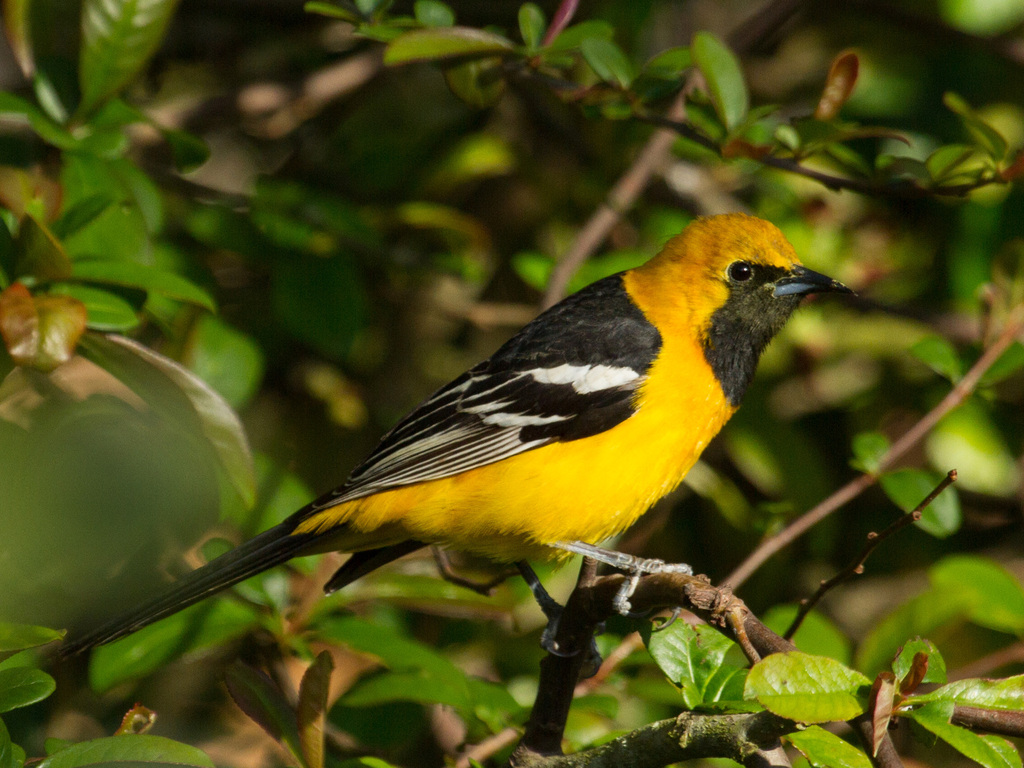
Hooded Oriole
Icterus cucullatus
About This Species
Watch flowering trees, palms and garden shrubs in the southwestern United States and Mexico, where this slim, black-and-yellow oriole often hangs upside down to probe blossoms for nectar and insects. Its thin, whistled song and habit of weaving hanging nests from palm fibre make it easy to locate once you know the habitat. Spring and early summer, when birds are establishing territories and feeding young, offer the best chance of sustained views.
Ethical Viewing Guidelines
- Viewing from a garden path or a few metres back from a nesting palm is generally enough not to disturb this species, which is well habituated to people in urban and suburban settings.
- Native migratory birds are protected in the United States and Mexico, meaning nests, eggs and adults should not be handled or deliberately flushed.
- Because orioles readily abandon a nest early in construction if repeatedly disturbed, it is best to observe from a distance during nest-building rather than approaching to inspect it.
LCAvesPasseriformesIcteridae
Seasonal Activity
666,487 sightings · 2000–2026
Citizen science records via GBIF
All monthsThis month
Classification
- Kingdom
- Animalia
- Phylum
- Chordata
- Class
- Aves
- Order
- Passeriformes
- Family
- Icteridae
Photo
(c) Donna Pomeroy, some rights reserved (CC BY-NC), uploaded by Donna Pomeroy
CC-BY-NC-4.0
Occurrence data from GBIF.