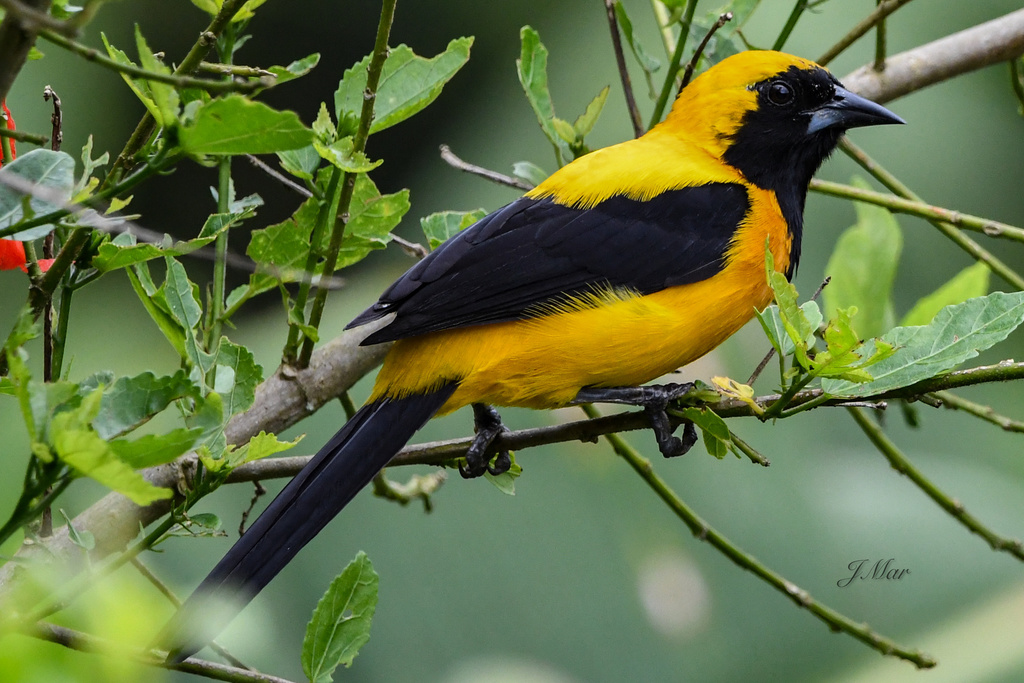
Yellow-Backed Oriole
Icterus chrysater
About This Species
A bright yellow-and-black oriole of forest edge, clearings and shade-grown plantations from Mexico through northern South America, often first noticed by its clear, whistled song delivered from a high, exposed perch. It forages deliberately through mid- and upper-canopy foliage for insects, nectar and fruit, and pairs frequently duet, making dawn a good time to locate a territory by ear. Forest edges bordering clearings or plantations tend to be more productive than deep, closed-canopy interior.
Ethical Viewing Guidelines
- It can usually be watched well from below its perch without needing to close the distance, since it will often continue singing and foraging if observers stay still and quiet.
- Avoid lingering near a nest, which is typically a hanging woven pouch in a canopy tree and can be abandoned if adults are kept away from it for too long.
- General wildlife protection laws apply across its Central and South American range, so treat any nest site as off-limits to close approach or photography from within the canopy.
LCAvesPasseriformesIcteridae
Seasonal Activity
154,921 sightings · 2000–2026
Citizen science records via GBIF
All monthsThis month
Classification
- Kingdom
- Animalia
- Phylum
- Chordata
- Class
- Aves
- Order
- Passeriformes
- Family
- Icteridae
Photo
(c) gabovinasco1, some rights reserved (CC BY-NC)
CC-BY-NC-4.0
Occurrence data from GBIF.