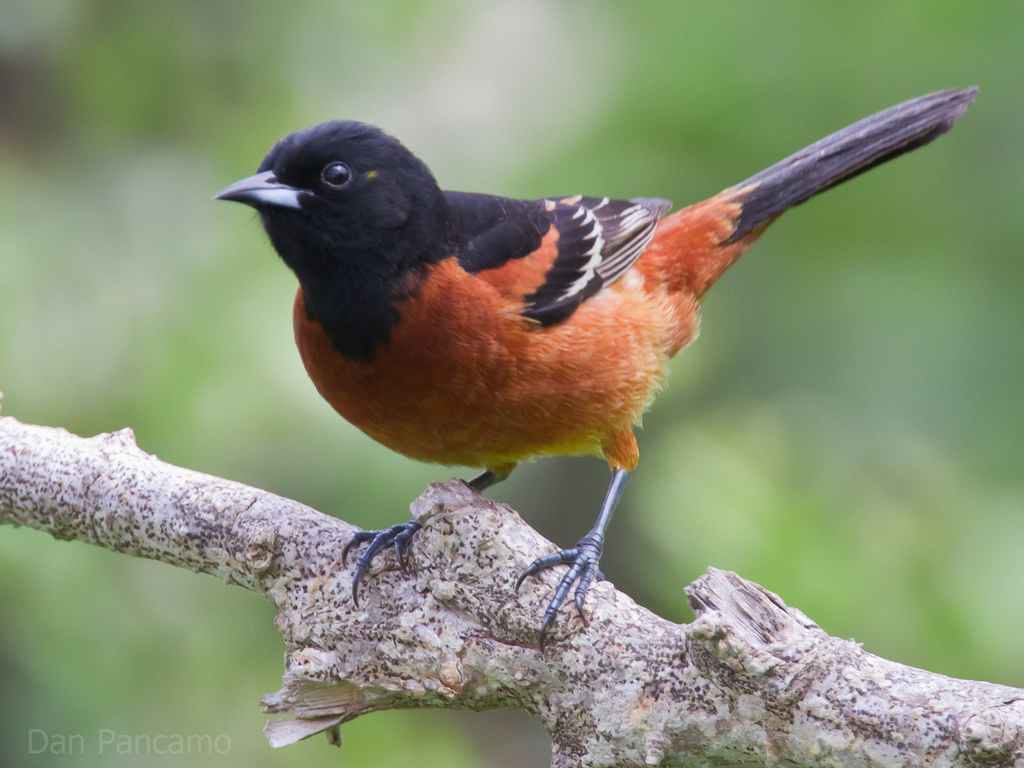
Orchard Oriole
Icterus spurius
About This Species
The smallest oriole in North America, found in open woodland edges, orchards, riverside trees and shade trees in towns, where males show a deep chestnut and black plumage that can look surprisingly dark in poor light. Its rich, warbling song is often the first clue to its presence, delivered from mid-canopy perches during the breeding season. Late spring and early summer, when males are singing on territory, offer the best chance of a clear view.
Ethical Viewing Guidelines
- Viewing from a distance of several metres with binoculars is usually enough, since approaching too closely to a singing male or a nest can cause it to abandon a favoured perch or territory.
- Migratory bird protections apply across its breeding and wintering range in the Americas, though the specific legal framework differs between countries, so check local rules before photographing a nest.
- Avoid lingering near a nest, which is a distinctive woven pouch typically hung from a slender branch.
LCAvesPasseriformesIcteridae
Seasonal Activity
1,380,846 sightings · 2000–2026
Citizen science records via GBIF
All monthsThis month
Classification
- Kingdom
- Animalia
- Phylum
- Chordata
- Class
- Aves
- Order
- Passeriformes
- Family
- Icteridae
Photo
(c) Dan Pancamo, some rights reserved (CC BY-SA)
CC-BY-SA-4.0
Occurrence data from GBIF.