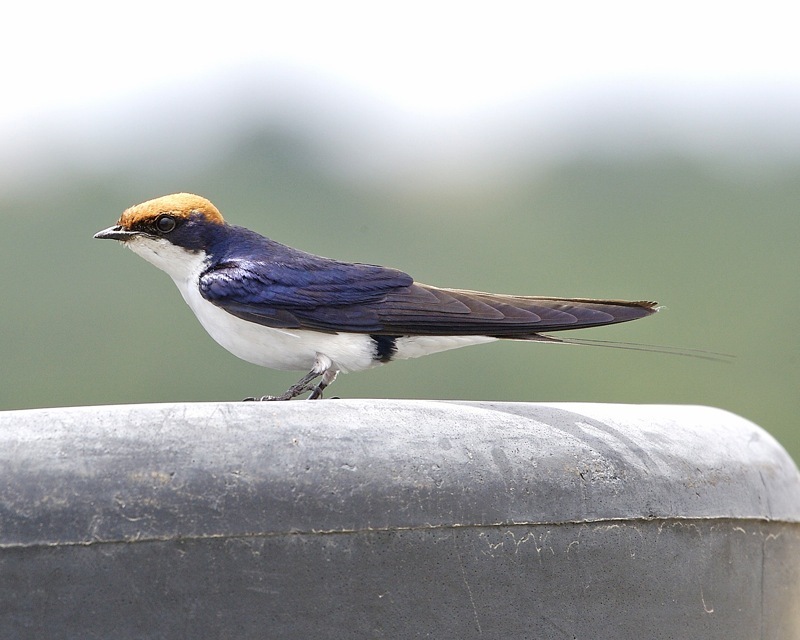
Wire-Tailed Swallow
Hirundo smithii
Habitat
Understory
Diet
Invertebrate
Active Time
Diurnal
Size
12 g
About This Species
This slender swallow favours open country near water across sub-Saharan Africa and South Asia, nesting under bridges, culverts, and building eaves and foraging low over rivers, lakes, and wetland edges with agile, swooping flight. Its long wire-like tail streamers and rufous cap make it distinctive even in flight, and it is often seen perched on wires or reeds near its nest site between foraging bouts. It is present year-round in much of its range, though activity around nest sites is most pronounced during the breeding season.
Ethical Viewing Guidelines
- As a widespread species tolerant of human structures for nesting, observing from a normal distance without lingering directly beneath active nests is sufficient and avoids stressing breeding adults.
- Legal protections vary considerably across its African and Asian range, from general wildlife legislation in some countries to more limited protection in others, so no single rule applies universally and local regulations should be checked.
- Because nests are often built on buildings and bridges, avoiding disturbance or removal of active nests during the breeding season is the most practical way to minimise harm.
Seasonal Activity
254,784 sightings · 2000–2026
Citizen science records via GBIF
Classification
- Kingdom
- Animalia
- Phylum
- Chordata
- Class
- Aves
- Order
- Passeriformes
- Family
- Hirundinidae
Traits
- Diet
- Invertebrate
- Foraging
- Understory
- Activity
- Diurnal
- Body mass
- 12 g
Photo
(c) Lip Kee Yap, some rights reserved (CC BY-SA)
CC-BY-SA-4.0
Occurrence data from GBIF.