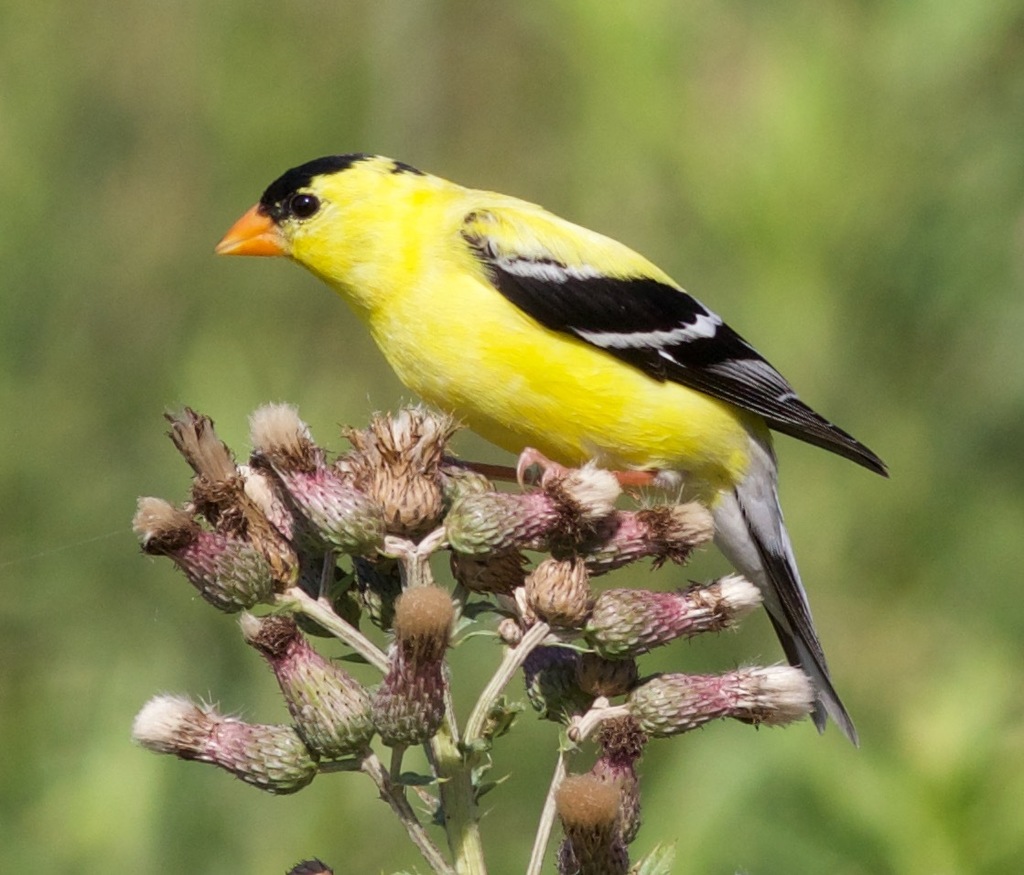
American Goldfinch
Spinus tristis
About This Species
Bright yellow-and-black breeding males are easiest to spot from late spring into summer, often clinging acrobatically to thistle, sunflower, and coneflower heads to pull out seeds, while the buffier winter plumage of both sexes blends in more at feeders. Listen for a cheerful, undulating flight call often rendered as potato-chip, given as the birds bounce between weedy fields, forest edges, and backyard feeders. Because it nests later than most songbirds, waiting for thistledown to line its nest, activity around nesting sites often peaks in mid- to late summer rather than spring.
Ethical Viewing Guidelines
- This finch tolerates people well at feeders and garden plantings, so a comfortable viewing distance of a few metres is usually enough without causing it to flush.
- Nests are typically built high in shrubs or small trees and, like most native songbirds, are protected from disturbance under wildlife law in the US and many other countries, so avoid approaching or handling an active nest.
- If you feed finches, clean feeders and bird baths regularly, since disease can spread between birds crowding a shared feeding station.
LCAvesPasseriformesFringillidae
Seasonal Activity
19,390,443 sightings · 2000–2026
Citizen science records via GBIF
All monthsThis month
Classification
- Kingdom
- Animalia
- Phylum
- Chordata
- Class
- Aves
- Order
- Passeriformes
- Family
- Fringillidae
Photo
no rights reserved, uploaded by Glenn Berry
CC0-1.0
Occurrence data from GBIF.